From e-commerce deliveries arriving at your doorstep to bulk shipments moving through global supply chains, लहरदार डिब्बे are everywhere. Their durability, lightweight structure, and cost-effectiveness have made them the backbone of modern packaging and logistics. Businesses across industries rely on them not only to protect products during transportation but also to create branded packaging experiences that strengthen customer impressions.
इस गाइड में, we’ll break down the different types of corrugated boxes, explore their real-world uses, and examine the pros and cons of corrugated boxes. We’ll also explain why many brands collaborate with experienced corrugated packaging box manufacturers to design a custom corrugated box that balances protection, ब्रांडिंग, and cost.
What Is Corrugated Cardboard?
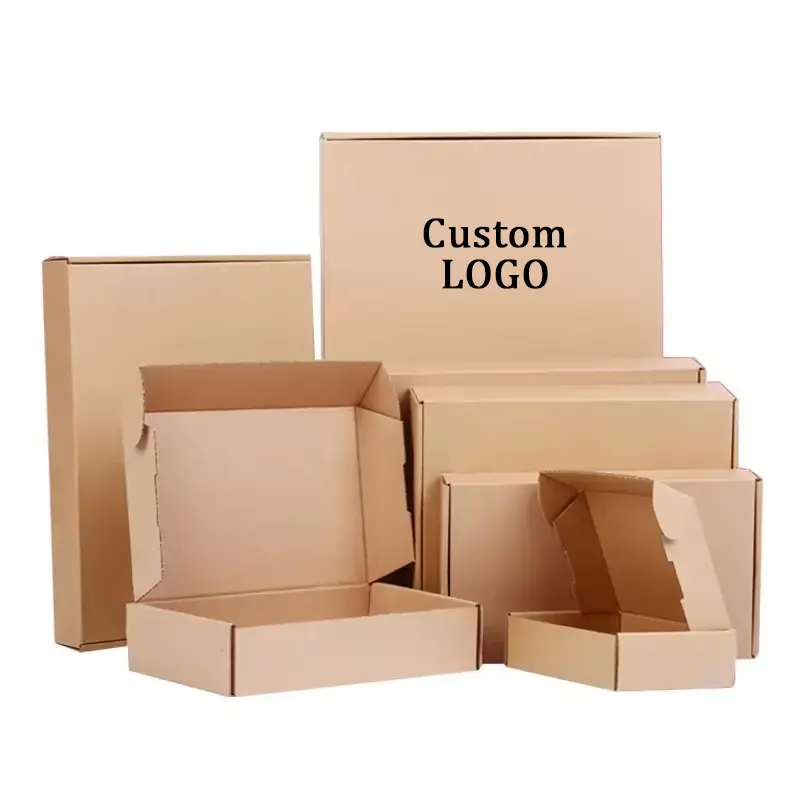
Before exploring box styles and applications, it’s important to understand what is corrugated cardboard and why it’s widely used for shipping and packaging.
Corrugated cardboard is a multi-layer paper material engineered for strength and cushioning. Unlike regular cardboard sheets, corrugated board includes a fluted inner layer placed between flat linerboards. This design creates a lightweight structure capable of absorbing impact and protecting products during transportation.
Structure of Corrugated Cardboard
Outer Linerboard
The outer linerboard forms the visible exterior of the box and plays an important role in durability and branding.
- Provides structural protection for the box
The outer linerboard protects the internal layers from external pressure, स्क्रैच, and environmental factors during shipping and storage.
It acts as the first barrier against impacts, helping maintain the integrity of the entire packaging structure.
- Supports high-quality printing and branding
Logos, उत्पाद की जानकारी, and marketing graphics are usually printed on this layer. Businesses can use it to transform a simple shipping box into a branded packaging experience.
- Improves stacking strength
High-quality linerboard helps maintain box shape when stacked in warehouses or shipping containers. This is especially important for logistics operations that rely on pallet stacking.
Fluted Medium
The fluted medium is the distinctive wavy layer sandwiched between linerboards.
- Absorbs shocks and vibrations
The wave-like structure creates air pockets that cushion products from impacts during shipping. This reduces the risk of breakage for fragile goods.
- Adds structural rigidity
The fluting increases compression strength, allowing boxes to support stacked weight. This design enables corrugated boxes to remain lightweight while maintaining durability.
- Enhances insulation properties
The air pockets formed by the flutes provide mild temperature insulation. This makes corrugated packaging suitable for certain food or temperature-sensitive shipments.
Inner Linerboard
The inner linerboard forms the internal surface of the box.
- Supports the fluted medium
It stabilizes the fluted structure and helps maintain the box’s overall shape. This ensures the packaging performs consistently during handling.
- Protects the product inside
The smooth inner surface prevents scratches and abrasion on products. It also improves compatibility with inserts or protective fillers.
Different Types of Corrugated Boxes
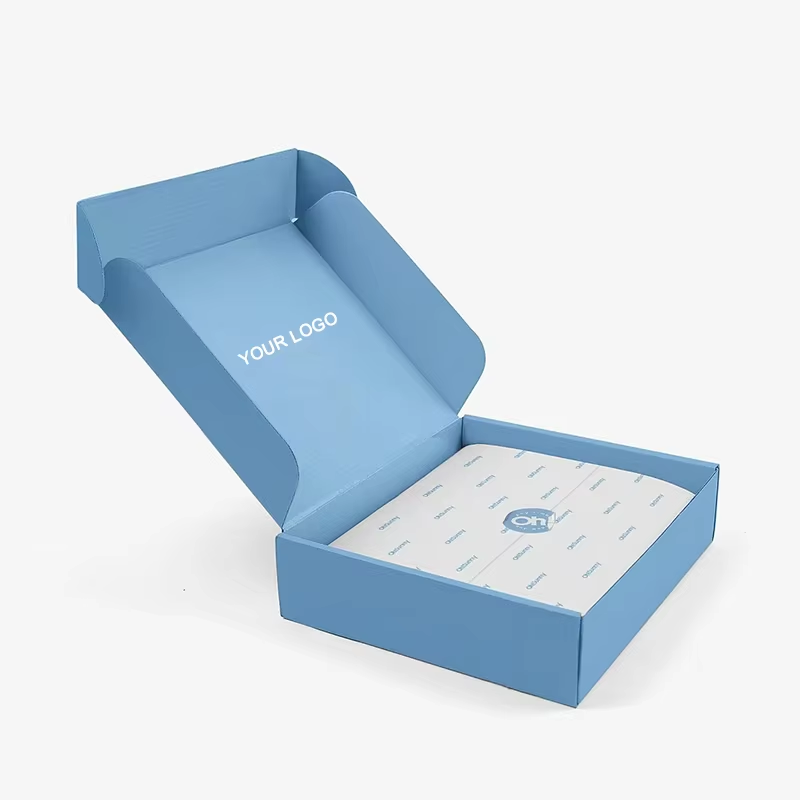
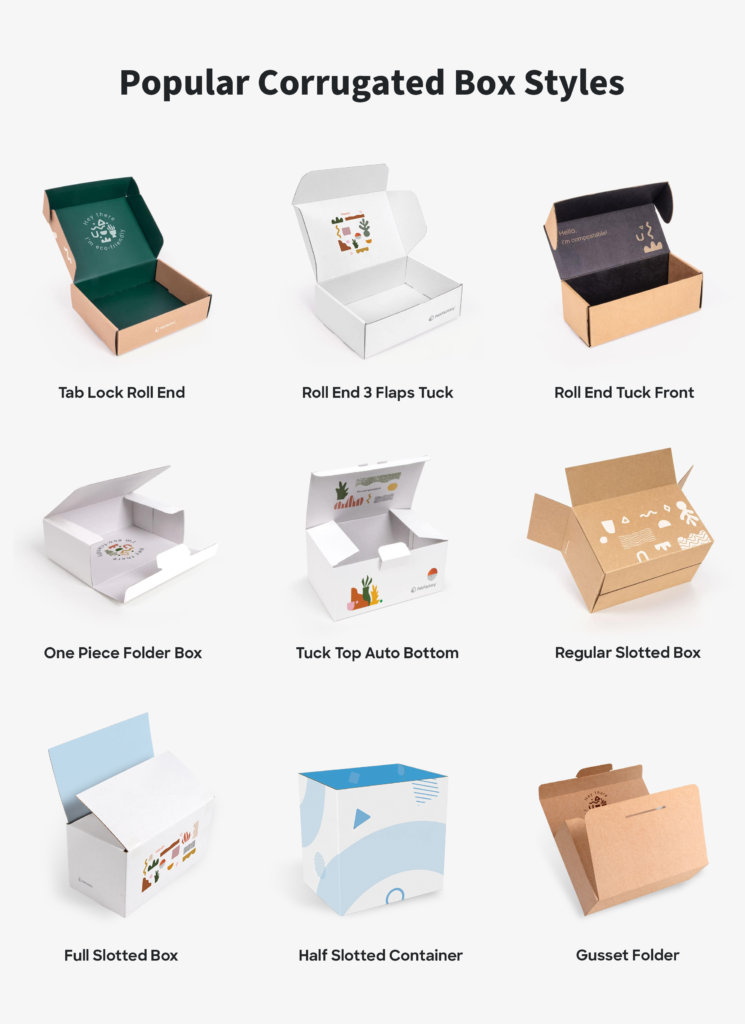
Corrugated boxes come in many designs, each created for specific packaging needs. Understanding the different types of corrugated boxes helps businesses choose the most efficient and protective packaging solution.
Regular Slotted Container (RSC)
The Regular Slotted Container is the most widely used corrugated box design in shipping and logistics.
- Balanced flap structure
All four flaps are the same length and meet in the center when closed. This design distributes pressure evenly across the box top and bottom.
- Minimal material waste
The RSC design maximizes material efficiency during manufacturing. This makes it one of the most economical packaging solutions for high-volume shipping.
- Ideal for shipping various product types
RSC boxes can be used for electronics, कपड़े, consumer goods, and industrial components. Their adaptable design allows businesses to package items of different sizes.
- Compatible with protective inserts
Bubble wrap, foam inserts, or cardboard dividers can easily be added. This increases protection for fragile or high-value items.
Die-Cut Corrugated Boxes
Die-cut boxes are custom-shaped boxes produced using specialized cutting tools.
- Designed for specific product dimensions
Die-cut packaging can be tailored to fit a product perfectly. This minimizes wasted space and improves shipping efficiency.
- Supports unique packaging shapes
Businesses can create packaging with special folds, locking tabs, or display openings. This flexibility is ideal for premium product packaging.
- Reduces the need for extra fillers
A precisely designed custom corrugated box keeps products stable during transportation. This reduces the need for additional cushioning materials.
Ideal for Branding and Retail
- Enhanced visual presentation
Custom shapes and creative designs make products stand out on retail shelves. Packaging becomes part of the brand experience.
- Improved customer unboxing experience
Die-cut boxes often feature easy-open structures. This adds convenience and improves customer satisfaction.
- Flexible design possibilities
Businesses can incorporate handles, compartments, or locking mechanisms. These design elements improve both functionality and aesthetics.
Full Overlap Slotted Container (FOL)
The Full Overlap Slotted Container is designed for heavier products and demanding shipping conditions.
Superior Strength and Protection
- Overlapping flaps reinforce the structure
The top and bottom flaps fully overlap when closed. This creates a double layer of cardboard at critical pressure points.
- Better weight distribution
The overlapping design spreads pressure across the box surface. This reduces the risk of box failure under heavy loads.
- Greater resistance to impacts
The double-layer design provides additional cushioning. This helps protect fragile or valuable items.
Ideal for Heavy or Fragile Products
- Used in industrial packaging
Machinery parts, औजार, and heavy components often require stronger boxes.
FOL containers provide the durability needed for these shipments.
- Improves stacking performance
The reinforced flaps increase stacking strength in warehouses. This reduces the risk of crushing during storage.
- Reliable for long-distance transport
FOL boxes perform well in global shipping environments. They offer better durability during handling and transit.
Pros and Cons of Corrugated Boxes

While corrugated packaging offers many advantages, it also has some limitations. Understanding the pros and cons of corrugated boxes helps businesses choose the most suitable packaging option.
Advantages of Corrugated Boxes
- Strong multi-layer construction
The fluted structure absorbs shocks and vibrations during transportation. This reduces the likelihood of product damage.
- High compression strength
Corrugated boxes can support significant weight when stacked. This is essential for warehouse storage and pallet shipping.
- Effective cushioning properties
The air pockets within the flutes act as natural shock absorbers. This protects fragile items such as electronics or glass products.
- Affordable mass production
Many corrugated packaging box manufacturers produce boxes at large scale.
- Made from renewable materials
नालीदार कार्डबोर्ड is primarily produced from recycled paper fibers. This reduces reliance on virgin materials.
Disadvantages of Corrugated Boxes
- Sensitive to humidity
Standard corrugated cardboard can weaken when exposed to moisture. High humidity environments may reduce box strength.
- Weight limitations
लहरदार डिब्बे have load limits depending on their design. Extremely heavy products may require wooden or plastic containers.
- Structural failure risk
Overloading a box can lead to crushing or tearing.
Proper box strength selection is essential.
- Requires a correct flute and board type
Choosing the right types of cardboard ensures sufficient strength. Double-wall or triple-wall boards are often used for heavier goods.
Common Uses of Corrugated Boxes
Corrugated boxes support countless industries thanks to their versatility.
E-Commerce and Retail
- Essential for online shipping
Every online order typically requires a corrugated shipping box. This makes them a cornerstone of e-commerce logistics.
- Protects products during last-mile delivery
Packages may pass through multiple handling points before reaching customers. Corrugated boxes help prevent damage.
Food and Beverage Industry
- Used for transporting packaged foods
Many food products are shipped in corrugated cartons. These boxes provide lightweight protection.
- Compatible with cold chain logistics
Special coatings can improve moisture resistance. This allows boxes to be used in refrigerated transport.
Electronics and Consumer Goods
- Protects delicate components
Electronics are sensitive to impacts and vibrations. Corrugated packaging provides cushioning during transit.
- Allows custom inserts
Foam or cardboard inserts keep products secure inside the box. This prevents internal movement.
उपवास
Which Industry Uses Most Corrugated Boxes?
The e-commerce industry uses the most corrugated boxes today. With the rapid growth of online shopping, millions of products are shipped every day, and most orders rely on corrugated boxes for safe delivery. Their lightweight structure, strong protection, and flexible sizing make them ideal for shipping a wide range of products.
Other major users include the food and beverage industry, which uses corrugated boxes to transport packaged foods, as well as manufacturing and electronics companies, which rely on them to protect products during storage and shipping.
निष्कर्ष
Corrugated boxes may seem simple at first glance, but they play a vital role in global commerce. From protecting fragile goods to supporting efficient logistics systems, their unique structure makes them one of the most reliable पैकेजिंग समाधान available today. By understanding what is corrugated cardboard, exploring the different types of corrugated boxes, and evaluating the pros and cons of corrugated boxes, businesses can make smarter packaging decisions that improve both product protection and operational efficiency.
If you’re looking to develop high-quality packaging tailored to your products, working with experienced corrugated packaging box manufacturers is key. पर BailiPaperPack, we specialize in creating durable and visually appealing custom corrugated box solutions designed for modern brands and growing businesses.