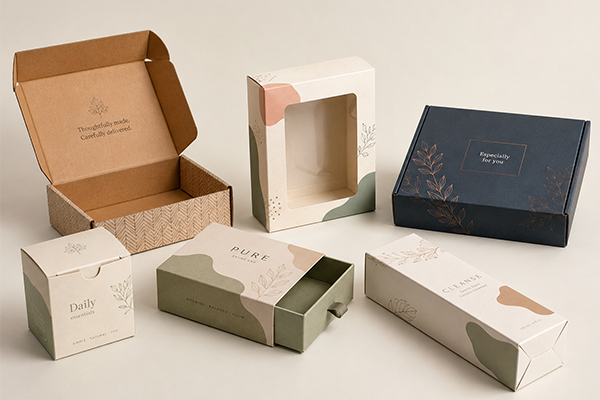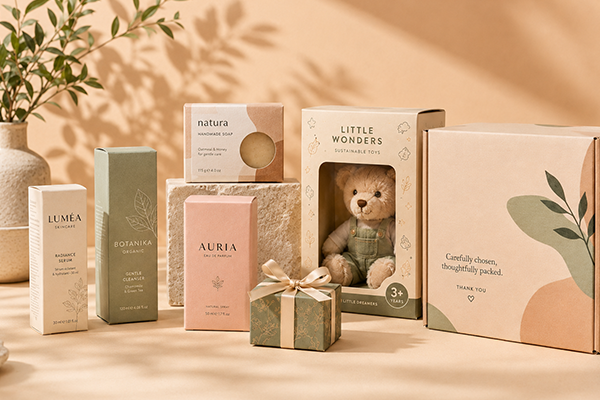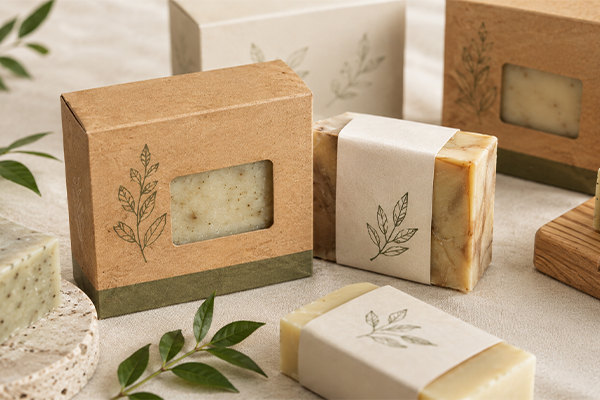
Pick up a lipstick box and a candle box side by side, and they’ll feel almost nothing alike — one folds flat and weighs next to nothing, the other has a locked bottom built to hold real weight. That difference isn’t decorative. It’s the whole reason paper boxes come in so many shapes in the first place.
A skincare serum needs something different from a cookie gift set. A toy on a store shelf has different display demands than the same toy shipped straight to someone’s door. A perfume box is built around the moment of opening it; a standard folding carton is built around getting a thousand units packed as fast and cheaply as possible. Same material family — paperboard — completely different jobs.
For brands, picking a box style is really a strategy decision wearing a design costume. Get the structure wrong and you’ll feel it later: bottoms that sag, products that rattle around inside, assembly lines that slow to a crawl, or a display box that looks wrong on the shelf it was meant for. This guide walks through the common paper box styles and where each one earns its keep, so that decision gets easier before production starts.
Why Box Style Isn’t Just a Design Choice
A box is never just a container — it’s the thing standing between a product and however it gets handled, from the assembly line to the store shelf to the customer’s hands. Picking the right one means weighing product size, weight, and shape against how it’ll be displayed, shipped, opened, and remembered.
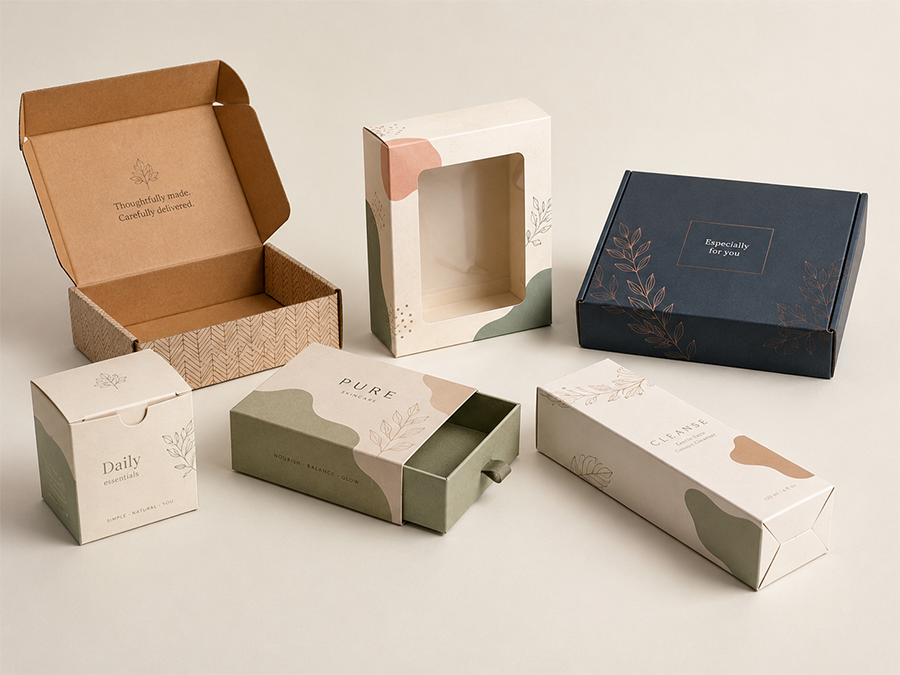
Lipstick is light enough for a basic tuck-end carton to hold up fine. A candle, on the other hand, has real mass — drop that same product into a tuck-end box and the bottom will eventually give. Products that sell on looks alone, like cookies or handmade soap, often lean on a window cutout to do the convincing. Anything shipping direct to a customer usually needs the extra muscle of a corrugated mailer, since a delivery truck is a rougher environment than a store shelf.
None of this means the priciest structure wins by default. The right box is the one that matches what the product actually needs — not the fanciest option in the catalog.
1. Tuck-End Folding Cartons
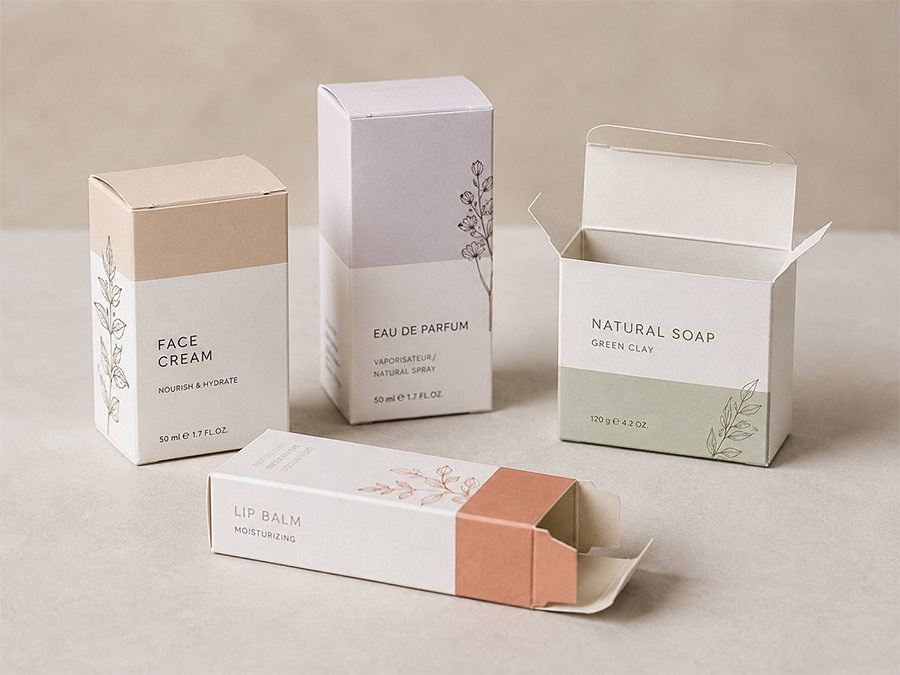
If there’s a “default” paper box, this is it. A single sheet of folding paperboard, flaps that tuck into the top and bottom, and a handful of variations — straight tuck, reverse tuck, tuck-top, locking tab — depending on how it needs to open and close. Cheap to produce, light to ship flat, and fast to run through high-volume production.
You’ll find this structure behind cosmetics, skincare, lipstick, perfume samples, soap, small toys, toothbrushes, tea packs, coffee sticks, candy, small electronics accessories, and most personal care products. Brands lean on it because it prints and folds easily, which makes CMYK color, Pantone matching, lamination, spot UV, foil stamping, and embossing all straightforward to apply at scale.
Where it falls short: weight. Push a tuck-end box past what its bottom seam can bear — without reinforcement — and it starts to sag or pop open. Sizing also has to be tight; a box that’s even slightly off can leave product rattling around inside, or make the flaps a fight to close.
2. Auto-Lock Bottom Boxes
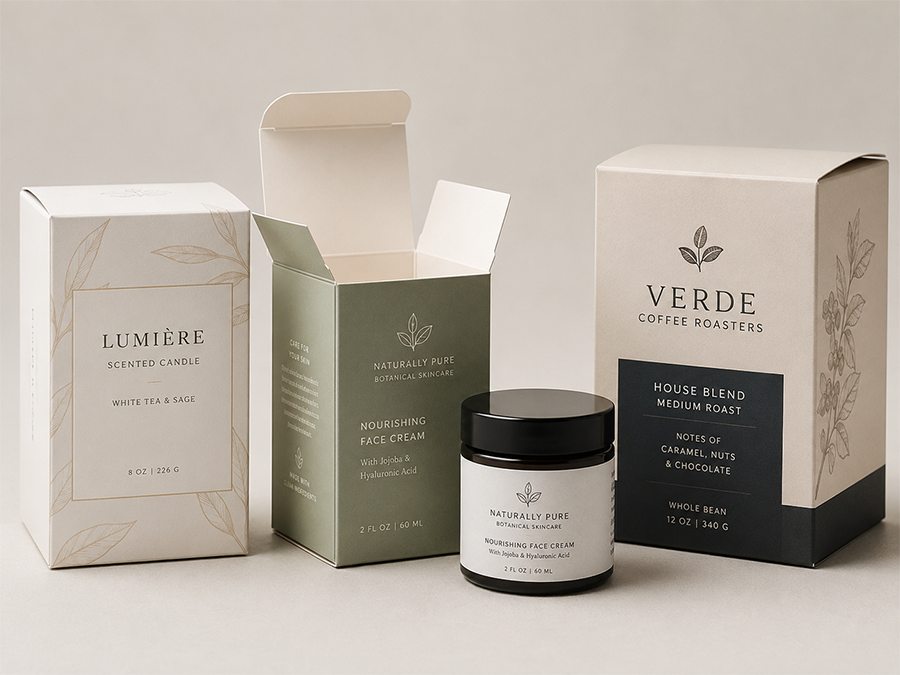
Think of this as the tuck-end box’s sturdier sibling. The base comes pre-glued and snaps into a locked position the moment the box is opened flat — no manual folding required, which is exactly why it’s also called a crash lock bottom.
That locked base makes it the go-to for candles, glass jars, heavier cosmetics, food packs, coffee products, tea gift packs, small bottles, toys, and health products — basically anything with enough weight that a standard tuck bottom would eventually let it down. The automatic lock also speeds up packing lines, since there’s no fiddly bottom-folding step slowing things down.
The trade-off is production complexity. Die-cutting and gluing that pre-formed base add a step, which nudges the cost up slightly — and the manufacturing has to be precise, or that “automatic” lock won’t snap cleanly into place.
3. Sleeve Paper Boxes
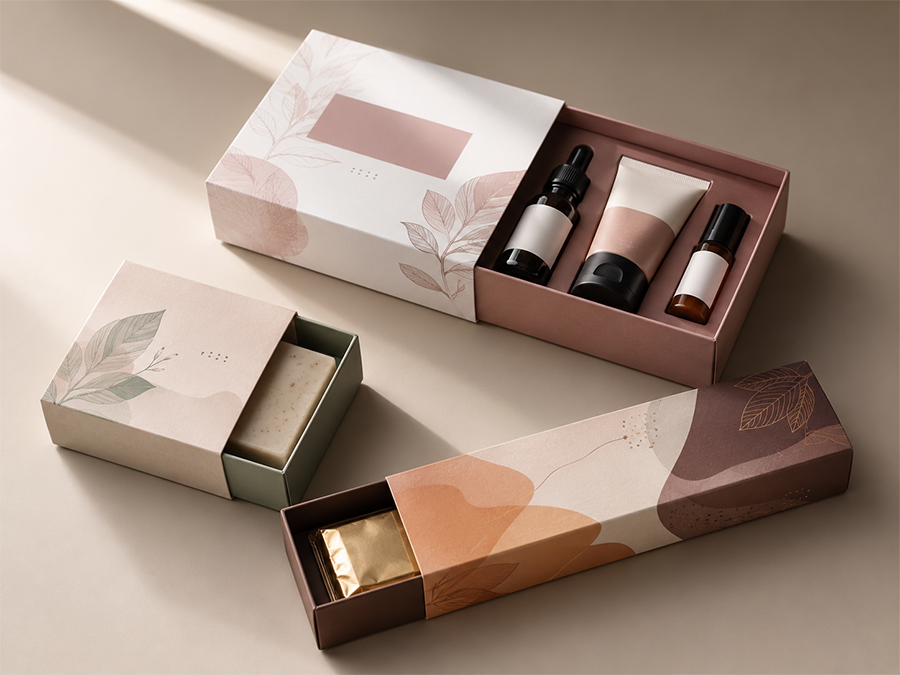
A sleeve box is refreshingly simple: a printed paper wrap that slides over an inner tray or product that’s already holding itself together. All the branding, none of the structural heavy lifting.
That makes it a natural fit for chocolate bars, soap, tea, coffee packs, cosmetic sets, gift sets, food trays, stationery, apparel accessories, small electronics, and skincare sets — anywhere the inner packaging is already doing its job and the sleeve just needs to look good. It’s also a favorite for seasonal packaging, since swapping out a printed sleeve is far cheaper than redesigning an entire box for every holiday.
The one thing that has to be right is fit. A sleeve cut too loose slips around during handling; one requiring more protection often gets paired with a rigid inner tray to give the whole package some backbone.
4. Drawer Boxes
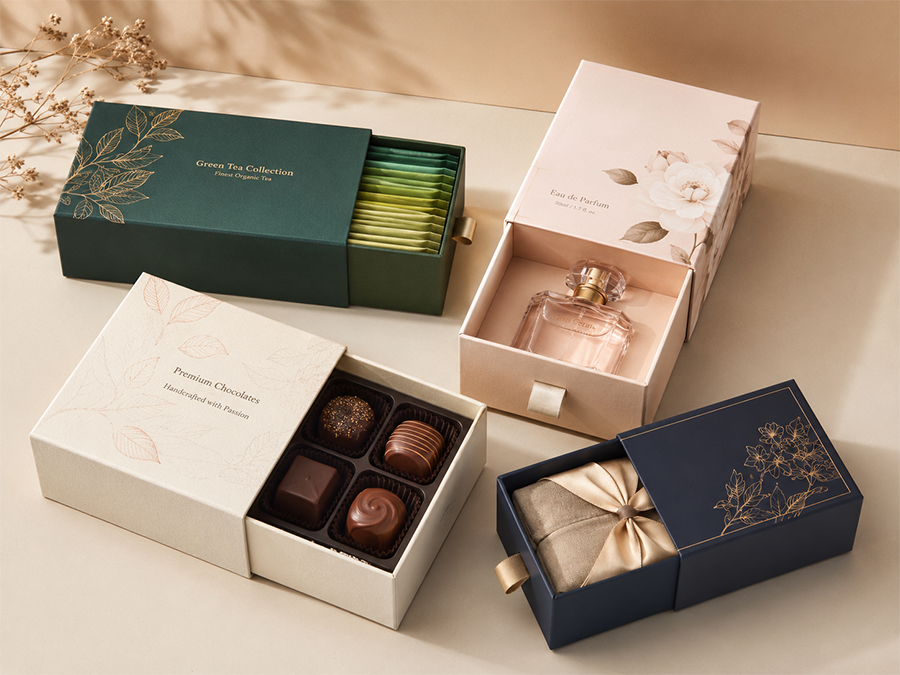
Also called slide boxes, this style pairs an outer sleeve with an inner tray that pulls out like, well, a drawer. It’s a small mechanical detail that changes the whole feel of opening a package — instead of tearing into it, you slide something out.
That slower, more deliberate motion is exactly why drawer boxes show up so often for jewelry, cosmetics, perfume, tea sets, coffee gift sets, chocolate boxes, stationery, and premium accessories. Anywhere the brand wants the unboxing itself to feel like part of the product, this structure delivers.
The trade-off: it needs precise sizing to slide smoothly rather than sticking or feeling loose, and because the moving parts can shift in transit, it often needs a bit of extra protection when it ships.
5. Rigid Paper Boxes
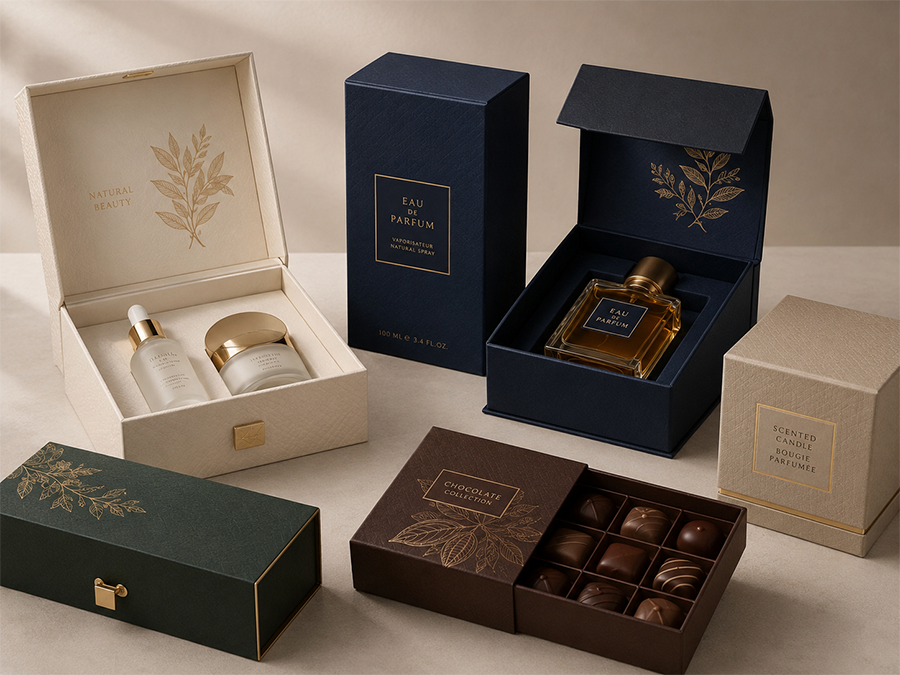
Rigid boxes are built from thick, dense paperboard, and they simply feel different in the hand than a folded carton — heavier, sturdier, more “this cost something.” Common formats include lift-off lids, magnetic closures, and book-style openings.
This is the structure behind perfume, luxury cosmetics, jewelry, premium chocolate, tea gift sets, electronics, watches, and corporate gifts — categories where perceived value matters as much as the product itself. Rigid board also protects better than folding cartons and takes high-end finishes and custom inserts especially well.
The catch is cost and space. Rigid boxes don’t flat-pack the way folding cartons do, so they eat up more storage room, and the thicker material and extra assembly steps push the price well past what makes sense for a low-cost product.
6. Window Paper Boxes
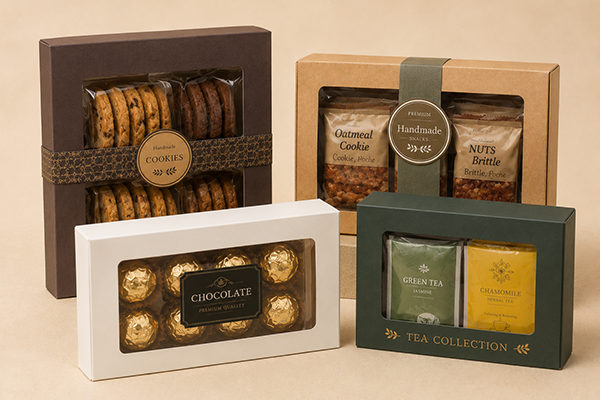
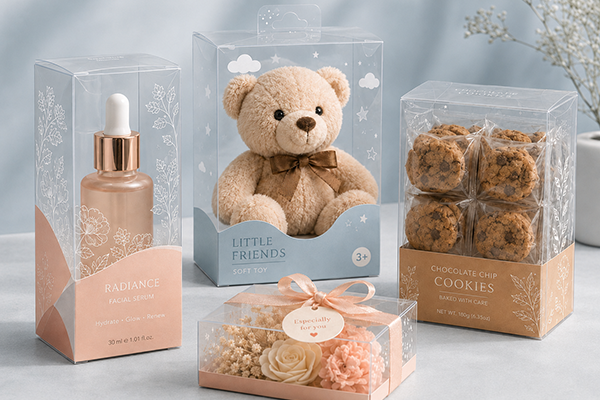
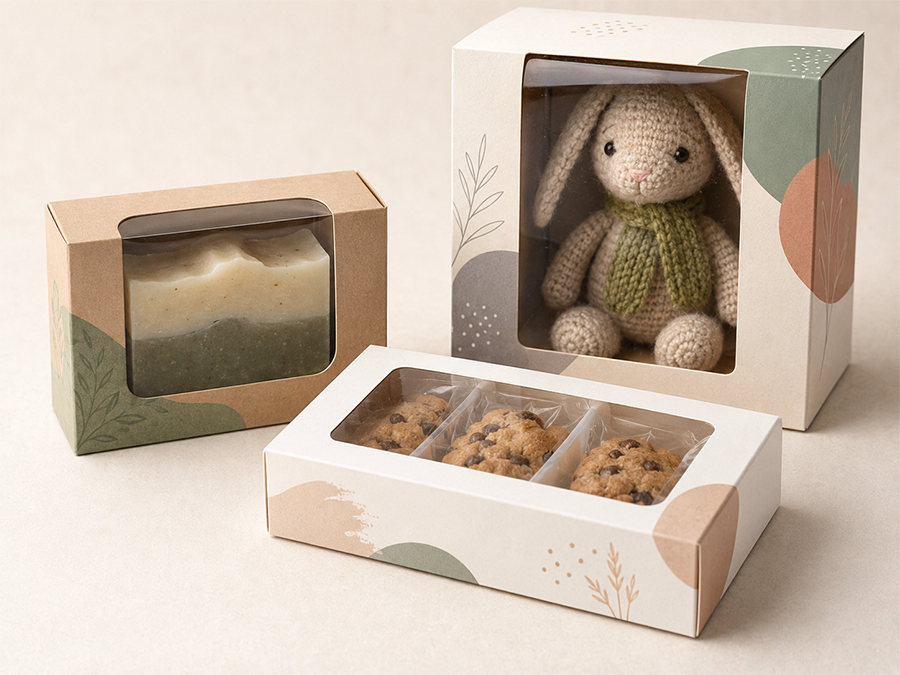
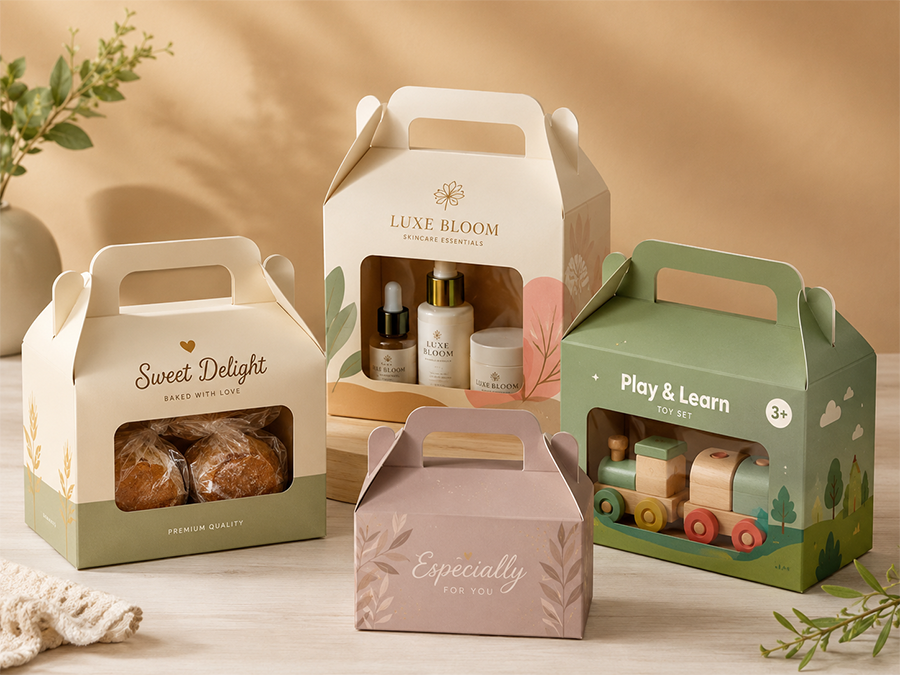
Sometimes the best sales pitch is just letting people see the thing. A window box cuts a clear panel into the printed structure so the product inside does the convincing on its own.
It’s a natural fit for toys, soap, cookies, chocolates, bakery products, candles, cosmetics, and handmade items — anything where appearance drives the buying decision. Instead of describing the color or texture on the packaging, the window just shows it.
Two things to watch: the window has to stay proportional to the box, since cutting away too much material weakens the whole structure, and for food products specifically, that window usually needs an inner wrapper or liner behind it — the box shows the product, it shouldn’t be the only thing touching it.
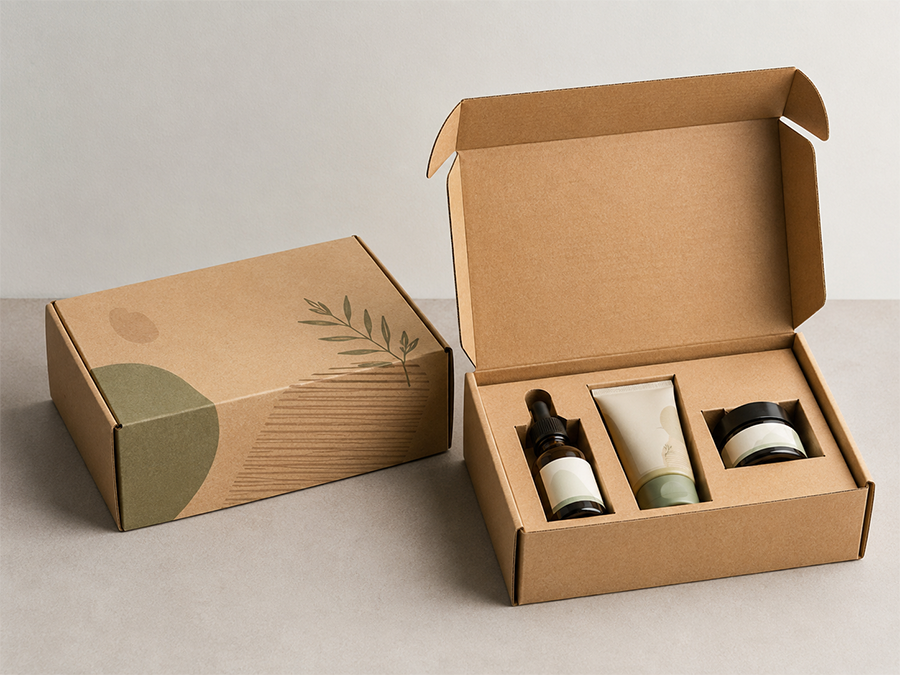
7. Corrugated Mailer Boxes
Mailer boxes are built from corrugated board specifically because they need to survive a trip through a sorting facility, a delivery van, and possibly a doorstep in the rain — retail-shelf good looks aren’t the point here, durability is.
They’re the standard for ecommerce products, subscription boxes, clothing, skincare sets, electronics, books, and promotional kits — basically anything that has to travel before a customer ever sees it. Beyond protection, the inside surfaces and printed exterior also give brands a second chance at a branding moment, right at the point of unboxing.
Sizing matters more here than almost anywhere else. Too much empty space inside means products shift around during transit, and it often forces the added cost of filler material just to keep things from rattling.
8. Handle Paper Boxes
A built-in handle sounds like a small addition, but it changes how a box gets carried, gifted, and remembered — nobody forgets the box they had to awkwardly cradle in both arms.
This style shows up for gift sets, bakery products, toys, cosmetics, and promotional kits — anywhere a customer might realistically be walking out of a store or event with the box in hand. It’s a small functional upgrade that also happens to boost the “this feels like a gift” factor.
The one thing that can’t be skipped: the handle has to be engineered for the actual weight inside. A handle that tears under load turns a nice packaging touch into a genuinely bad customer experience.
9. Display Paper Boxes
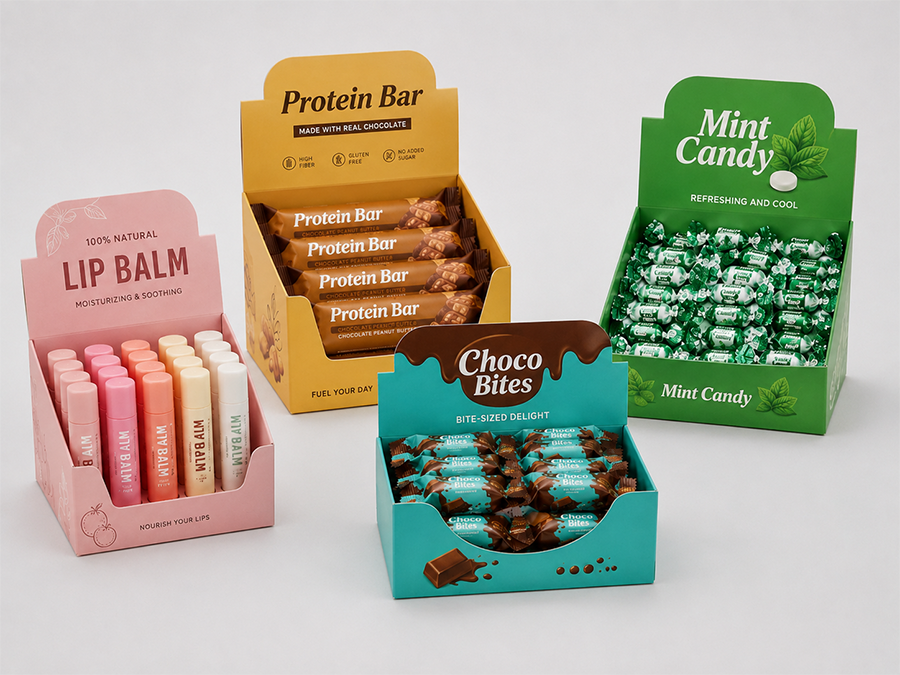
Display boxes are built to do double duty — hold multiple units and look good doing it, usually sitting right at checkout counters or endcaps where impulse buys happen.
Candy, lip balm, cosmetics, snacks, stationery, and promotional items are the usual residents of this format. The goal is simple: make a shelf full of small items look organized and grabbable rather than like loose stock someone dumped in a bin.
Structurally, they need enough strength to hold up under repeated handling — customers picking items up and putting them back — and the right footprint for wherever they’re meant to sit, whether that’s a checkout counter or a dedicated floor display.
10. Paper Tube Boxes
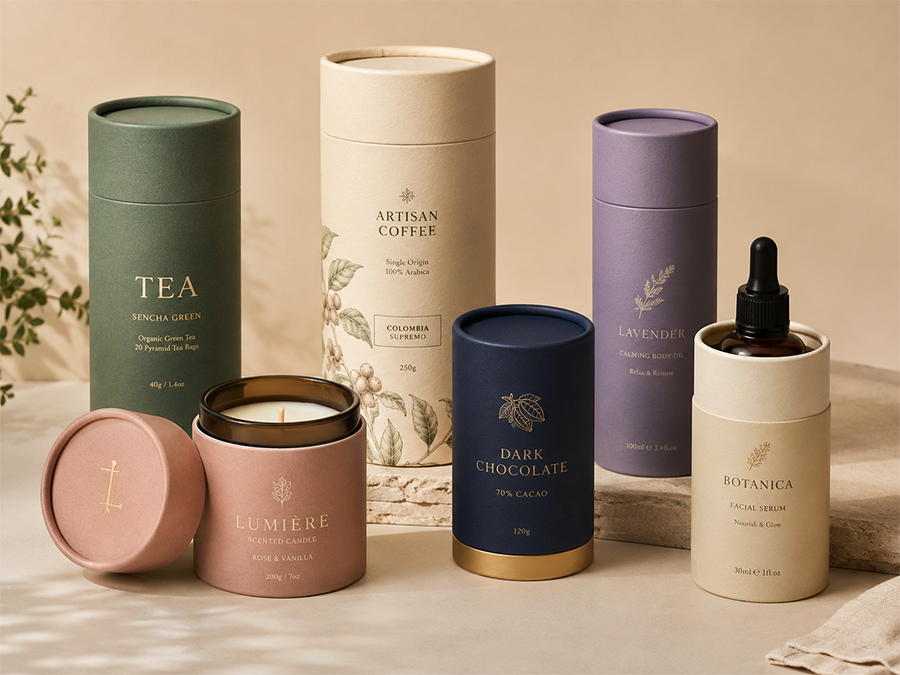
A cylinder stands out simply by not being a box — on a shelf full of rectangular packaging, a tube catches the eye almost by accident.
That distinctiveness is exactly why tea, coffee, candles, cosmetics, chocolate, and gift items reach for this shape so often. It signals “this is a little different” before a customer even reads the label, which is a useful trick for brands trying to stand apart in a crowded category.
The downside is practical rather than visual: tubes don’t nest or flat-pack the way folded cartons do, so they take up more warehouse space, and getting the diameter and length exactly right matters more than with a flexible folding structure.
How to Choose the Right Paper Box Style
Strip away the branding and finishes, and the decision comes down to a handful of practical questions: how much does the product weigh, where will it be sold, does it need to be seen, does it need an insert, does it involve food safety, and where does the brand want to sit — everyday or premium?
Light products tend toward folding cartons. Heavier ones need auto-lock bottoms, rigid stock, or corrugated board. Retail shelf products lean on visual appeal — windows, color, print finish. Ecommerce products lean on protection first, branding second. Premium brands often gravitate to rigid or drawer boxes because the slower unboxing experience matches the price point, while everyday products are better served by keeping things efficient and cost-effective.
For structural inspiration and current packaging trends, Packaging of the World and The Dieline are both worth browsing — they showcase a wide range of creative box structures and finishes from brands around the world.
Common Mistakes When Choosing Paper Box Styles
A few missteps come up again and again: choosing an expensive structure for a low-margin product that can’t absorb the cost, using a lightweight box for something genuinely heavy, ignoring how much the product shifts around inside once it’s sealed, sizing the box bigger than it needs to be, obsessing over the front panel design while ignoring how the box actually gets produced, and forgetting that a beautiful box still has to be practical to assemble at scale.
The Box That Disappears Into the Background
No single box style wins by default. A tuck-end carton is right for a lipstick and wrong for a candle; a rigid box is right for a perfume gift and overkill for a bag of everyday snacks. The point of walking through all ten styles isn’t to find “the best box” — it’s to recognize which problem your product actually has, so the structure solves for weight, visibility, shipping, or presentation, instead of solving for none of them at once.
Once that fit is right, the packaging tends to disappear into the background in the best possible way — it protects the product, sells it on the shelf, survives the trip to the customer, and never becomes the thing people complain about. That’s the real measure of a good box: nobody notices it, they just notice the product inside working the way it should.
From “Right Structure” to Production-Ready Box
Getting from “this seems like the right structure” to an actual production run takes more than picking a style off a list. Product dimensions, weight, order quantity, sales channel, and design direction all shape which paperboard, printing method, and finishing options make sense — and a structure that looks fine on screen can still fail once it’s die-cut, glued, and loaded with real product.
This is where working with an experienced packaging manufacturer pays off. Baili Paper Packaging works with brands across cosmetics, food, gifting, and retail to turn a rough idea into a tested, production-ready box — covering structure selection, material sourcing, printing and finishing, and physical sample testing before committing to bulk manufacturing.
FAQ
1. What are the most common paper box styles?
The usual lineup includes tuck-end boxes, auto-lock bottom boxes, sleeve boxes, drawer boxes, rigid boxes, window boxes, mailer boxes, handle boxes, display boxes, and paper tube boxes.
2. Which paper box style is best for cosmetics?
Tuck-end cartons cover most everyday cosmetics, while premium lines often step up to rigid or drawer boxes for a stronger unboxing moment.
3. Which paper box style is best for heavy products?
Auto-lock bottom boxes, rigid boxes, and corrugated mailer boxes all hold up well under extra weight.
4. Are window paper boxes suitable for food products?
Yes, though the food itself usually still needs an inner wrapper or liner for safety — the window shows the product rather than touching it directly.
5. What is the difference between a folding carton and a rigid box?
Folding cartons are lightweight and ship flat-packed; rigid boxes use thicker board, hold their shape permanently, and read as more premium.