Most packaging failures never happen at the box level. The outer carton arrives fine — no crushed corners, no torn flaps — and the product still looks like it took a beating. That’s an insert problem, not a box problem.
Products shift, tilt, or slide into each other during transit. उपहार पैकेजिंग में, that’s worse than a scuff: a set that arrives rearranged reads as careless, even if nothing is technically damaged. The box did its job. The insert didn’t.
Inserts get treated as an afterthought far too often — foam or cardboard stuffed in to fill space. That’s not what they actually are. An insert is a structural component that decides how a product sits, how it survives transit, and how it looks the moment the box opens. Get that structure right, and the product stays put, stays undamaged, and looks deliberate rather than dumped in.
Different products need genuinely different insert logic — a single fragile item, a five-piece gift set, and an ecommerce shipment don’t share the same set of constraints, even if they’re all “just holding something in place.” Choosing the right structure and material for the job is what separates packaging that performs from packaging that just looks good in a mockup.
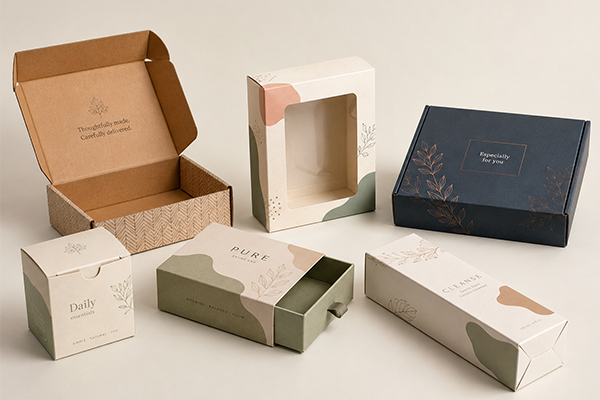
📷 Image Placement 1 — Featured Image
ALT: different paper box inserts used for product packaging Suggested Image: Open packaging boxes showing various insert structures and product arrangements
What an Insert Is Actually Doing Inside the Box
An insert’s core job is controlling movement. Strip it away, and the product depends entirely on the outer box for protection — which works fine right up until there’s extra room inside, or more than one item sharing the space, at which point shifting becomes almost guaranteed.
A properly built insert holds the product in place, absorbs internal impact before it reaches the product, and keeps the layout clean the moment the box is opened. That last part matters more than it sounds — in retail packaging, the first few seconds of the unboxing moment do a lot of the work in shaping how the customer feels about the purchase.
Ecommerce raises the stakes further. Products get handled more, vibrate more in transit, and sit under more stacking pressure than anything moving through a retail supply chain. An insert built for a store shelf and an insert built for a parcel truck are not interchangeable.
In practice, an insert almost always has to do two jobs at once — protect the product and present it well — rather than optimizing for just one.
内链建议:custom paper boxes → 定制纸盒产品页 内链建议:packaging box inserts → 包装盒内托产品页
Structure Decides More Than Material Does
Most people start insert selection by picking a material. That’s usually backwards — structure has a bigger effect on performance than material choice does.
The same paperboard or corrugated stock can behave completely differently depending on how it’s folded and where the support points sit. A small adjustment to a fold line or a support angle can change a product from “loose inside the box” को “locked in place,” without changing the material at all.
The structures that show up most often:
- Slot designs — the product sits directly in a cut opening
- Divider systems — separate compartments for multiple items
- Support platforms — raise the product to a specific height inside the box
- Wrap-around structures — brace the product from the sides
- Layered designs — stack multiple levels within one box
Each does a different job, and picking the right one comes down to a specific question: does this product need to be held still, kept separated from other items, raised into view, or all three at once?
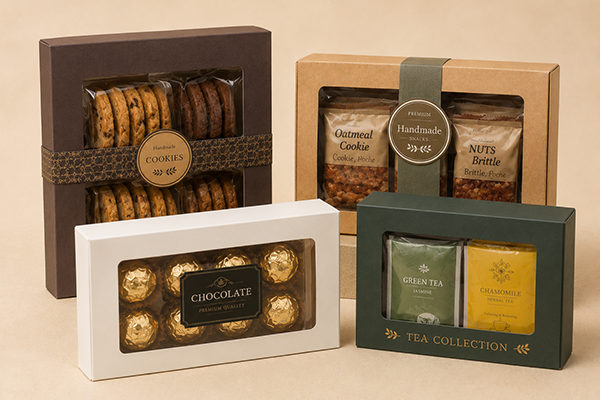
📷 Image Placement 2
ALT: different insert structures including slots dividers and layered designs Suggested Image: Examples or diagrams showing multiple insert structures side by side
Matching Material to What the Product Actually Needs
Once the structure is settled, the material choice narrows fast — because at that point, the question is no longer “what looks best” but “what can this structure actually support.”
Paperboard inserts suit lightweight products well. They print cleanly, match the outer box’s branding without extra finishing, and work fine for cosmetics, मोमबत्तियाँ, and small accessories. What they don’t do is hold up under real weight — push a paperboard insert past what it’s designed for, and it deforms.
नालीदार आवेषण bring real strength through their layered construction, which makes them the standard choice for heavier or fragile items — glass bottles, इलेक्ट्रानिक्स, anything that can’t afford to shift. The tradeoff is appearance: corrugated stock often needs extra finishing before it looks premium enough for gift-tier packaging.
Molded pulp inserts are shaped directly around the product, which makes them a strong option for irregular shapes that don’t fit neatly into a slot or divider. The trade-off is texture — molded pulp has a visibly rougher surface than paperboard, which doesn’t always suit a high-end aesthetic, but it’s often the practical choice for all-paper packaging systems.
None of these materials is universally “better.” The right one depends on product weight, भंगुरता, and what the packaging is actually being asked to do.
📷 Image Placement 3
ALT: comparison of paperboard corrugated and molded pulp inserts Suggested Image: Three types of inserts displayed with sample products
Different Products, Different Insert Logic
Single-product packaging is mostly a stability problem — a fitted slot or a support platform keeps the item centered and locked in place, and that’s usually the whole job.
Multi-item packaging shifts the priority toward organization. Dividers or compartment layouts do more than separate products cosmetically — they stop items from touching, which matters for anything that could scratch, dent, or transfer residue onto its neighbor.
Fragile products need the insert to absorb impact, not just hold position. This is where corrugated or molded pulp typically takes over from paperboard, since the cushioning requirement outweighs the appearance requirement.
Window or display packaging adds a precision constraint most other categories don’t have — the insert has to hold the product in exact alignment with the window, or the whole point of the window is wasted.
Ecommerce packaging puts durability above everything else. The insert has to survive repeated handling, not just look clean on day one.
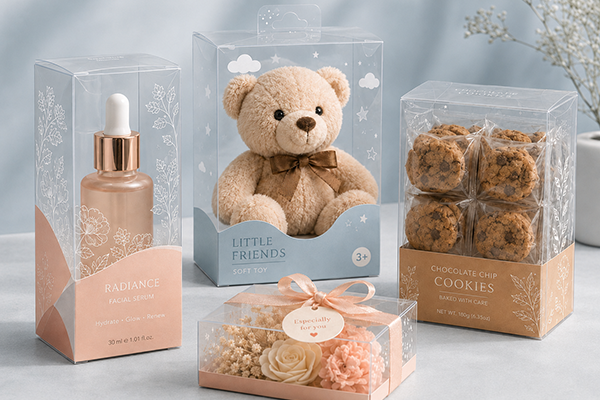
📷 Image Placement 4
ALT: insert designs for different product types including single and multi item packaging Suggested Image: Packaging examples showing different product categories and insert designs
Insert Design Shapes the Unboxing Experience Too
An insert’s job doesn’t end at “hold the product still.” It also shapes how easy the product is to actually get out of the box.
A good insert lets the product come out without a fight — no wedging, no awkward angles, no risk of damage during removal. Small details make a real difference here: finger cut-outs make lifting easier, and proper spacing keeps items from feeling jammed in.
An insert that looks great in photos but is genuinely annoying to use undercuts the whole packaging effort. सुरक्षा, प्रस्तुति, and convenience aren’t separate goals — a design that only nails one of the three is an incomplete design.
Where Insert Design Usually Goes Wrong
A handful of mistakes come up repeatedly, even in otherwise well-planned projects.
Overcomplicating the structure. Extra layers and complex folds add cost and assembly time without a proportional gain in performance.
Getting the fit wrong in either direction. Too loose, and the insert fails at its one job — stopping movement. Too tight, and it risks damaging the product or making removal a struggle.
Ignoring product weight. A lightweight material asked to support a heavy item will eventually deform or fail — no amount of clever folding fixes a material mismatch.
Designing the insert separately from the box. Insert and outer structure need to be developed together, or alignment issues surface late — usually after tooling is already committed.
Skipping physical testing. Drawings can’t catch every fit issue. Problems that don’t show up on paper have a way of showing up on the production floor instead.
Inserts Have Become Part of the Packaging Strategy, Not Just the Filling
Inserts used to be treated as a purely internal detail — something nobody thought about until the product arrived damaged. That’s changed. As more brands work to simplify packaging and cut unnecessary material, inserts have become one of the levers that actually gets pulled.
Done well, a leaner insert reduces material without reducing performance. Done carelessly, cutting material just shifts the damage rate upward — and a damaged product generates far more waste than a slightly oversized insert ever would. The goal isn’t minimal material for its own sake; it’s the least material that still does the job completely.
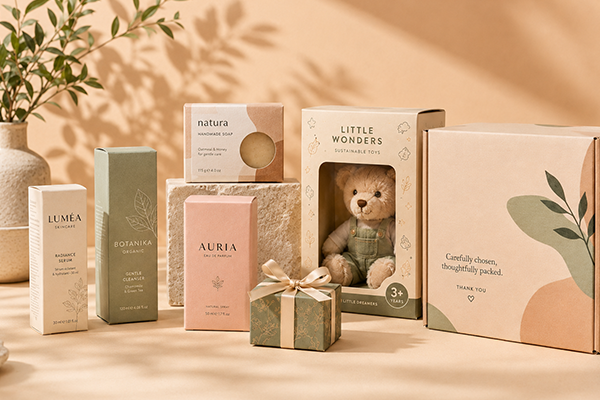
📷 Image Placement 5
ALT: modern packaging with efficient paper insert design Suggested Image: Clean packaging layout with minimal but effective insert structure
Why Sampling Isn’t Optional
An insert’s performance can’t be fully judged from a drawing — fit, stability, and usability only become clear once there’s a physical sample sitting in front of you with the real product inside it.
Testing with the actual product matters more than it might seem. Small variances in size or shape — the kind that never show up in a spec sheet — can be exactly what makes an otherwise solid design fail in practice. Sampling is what catches that before it becomes a production-scale problem instead of a one-off adjustment.
The Insert Is Doing More Work Than It Gets Credit For
A paper box insert isn’t packing material — it’s the component actually deciding whether a product survives shipping intact and looks intentional the moment it’s opened.
There’s no single correct insert. The right answer depends on structure, सामग्री, product type, and what the packaging is actually being asked to accomplish. Brands that pay attention to how the product actually behaves inside the box — not just how the insert looks on paper — end up with packaging that performs and presents well at the same time.
Developing Inserts with Professional Support
Effective insert development starts with accurate product information — dimensions, वज़न, मात्रा, and intended use — since guessing at any of these tends to surface as a fit problem later. Sharing an actual sample or a detailed drawing early on tends to shortcut a lot of back-and-forth.
From there, reviewing structure options, material choices, and assembly methods together — rather than sequentially — helps catch alignment issues before they’re locked into tooling. A manufacturer who treats insert and box as one connected system, rather than two separate deliverables, is generally the one worth working with.
If you are planning custom paper box inserts or packaging solutions, feel free to discuss your product details and packaging needs with our team to explore suitable structures and materials.
内链建议:custom paper boxes → 定制纸盒产品页 内链建议:paper box inserts → 纸盒内托产品页 内链建议:corrugated box inserts → 瓦楞内托产品页 内链建议:molded pulp inserts → 模塑纸浆内托产品页 内链建议:rigid gift boxes → 硬质礼品盒产品页
उपवास
1. What is the main function of a paper box insert?
It holds products in place, prevents movement, and improves presentation inside the box.
2. How do I choose the right insert material?
Start with product weight and fragility, then select a material that can structurally support those requirements.
3. Are inserts necessary for all packaging?
Not always, but they matter most for fragile items, multi-product sets, and premium packaging where presentation is part of the value.
4. Can inserts be customized?
Yes — inserts can be shaped around product dimensions, branding requirements, and the outer box structure.
5. What is the difference between paperboard and corrugated inserts?
Paperboard is thinner and better suited to retail display; corrugated carries more strength and is better suited to protection.
6. Are molded pulp inserts environmentally friendly?
They’re paper-based and generally support more sustainable, all-paper packaging systems.
7. Why should inserts be tested before production?
Physical testing catches fit, ताकत, and usability issues that drawings alone can’t reveal, reducing the risk of problems at production scale.