
Packaging should not be selected by appearance alone. One of the first technical questions in any packaging project is simple: how much does the product weigh?
Product weight affects the loads carried by bottom panels, side walls, inserts, closures, and the outer shipping package. As weight increases, a paper box packaging structure that works well for a light product may begin to bow, tear, open at the bottom, or allow too much movement during handling.
However, weight should not be used as a single-number shortcut for choosing paper thickness or box style. A compact 1 kg product and a tall 1 kg product can place very different stresses on a package. Shape, dimensions, center of gravity, fragility, distribution method, and internal support all matter.
This guide explains how product weight affects packaging material, paper box packaging, and structure and what buyers should confirm before mass production.

Why Product Weight Matters in Paper Box Packaging Design
Every package carries loads. The bottom supports the product, side panels resist deformation, folds transfer stress, and the outer shipping carton must withstand handling and stacking.
For a lightweight product, standard paperboard may provide enough stiffness for a paper box. As weight increases, the package may need stiffer board, stronger bottom construction, better internal support, or a separate corrugated shipping layer.
Weight is therefore one of the first specifications that should be confirmed before choosing paperboard or finalizing a paper box packaging dieline.
Weight Alone Does Not Determine the Material
A common mistake is asking, “What paper thickness should I use for a 500 g product?” without providing other information.
There is no universal answer.
Two products with the same weight can require different materials because their dimensions and load distribution differ. A short, wide item spreads weight differently from a tall, narrow item, while an off-center load can distort an insert or side panel.
The packaging decision should consider:
- Total filled product weight
- Product dimensions and shape
- Center of gravity
- Fragility
- Box dimensions
- Amount of empty space
- Retail conditions
- Shipping conditions
- Whether the package is a paper box, folding carton, or corrugated box
Weight is a major input, but it is not the complete specification.
How Product Weight Affects Paperboard Selection for Paper Box Packaging
For folding paper boxes, increasing product weight usually increases the need for stiffness, bending resistance, and bottom support.
A lightweight item may work with relatively light paperboard because the carton mainly provides branding, containment, and surface protection. As the load increases, a stiffer or heavier board can help the paper box maintain shape and resist bulging.
But simply choosing the thickest paperboard is not always the best solution. Very heavy board can affect folding, creasing, gluing, and the proportions of a small paper box. It can also add material without correcting a weak structural design.
For heavier loads, structure often becomes as important as material. A stronger bottom or internal support can sometimes improve performance more effectively than increasing board thickness alone.
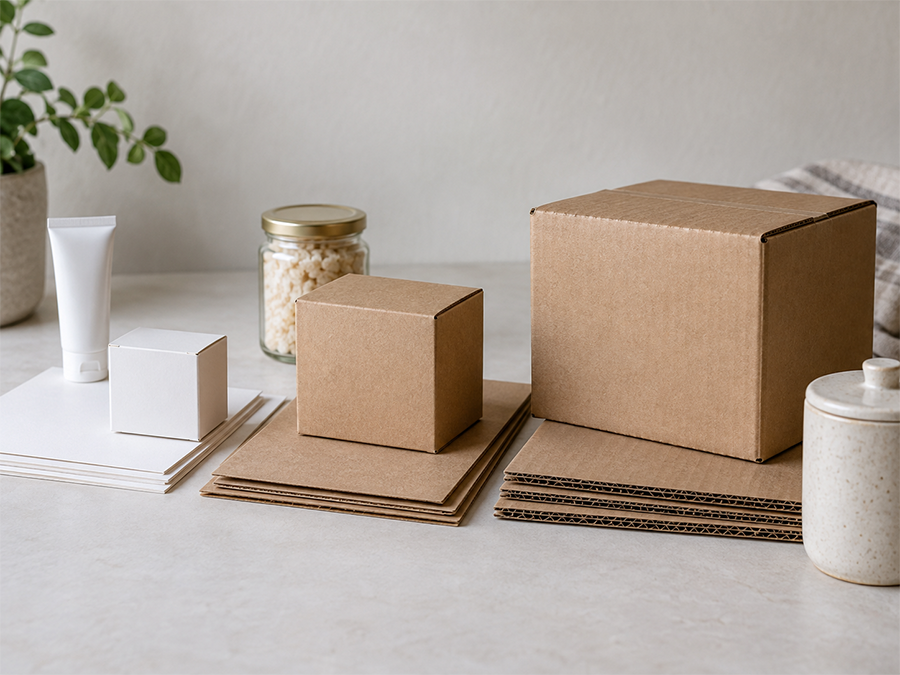
How Weight Changes the Bottom Structure of a Paper Box
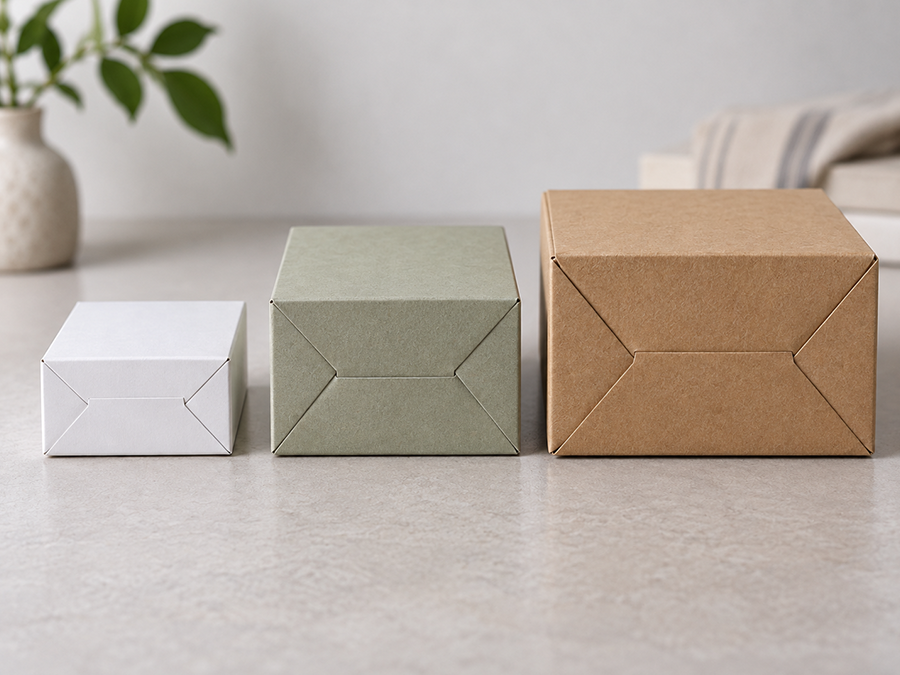
The bottom is one of the first areas to review as product weight increases.
A basic tuck-bottom structure may be suitable for lightweight contents. As the load becomes heavier, more secure bottom constructions may be needed so weight is transferred across several panels rather than relying on a simple closure.
Auto-lock or crash-lock bottoms are commonly considered when stronger bottom support and faster assembly are required. Other reinforced or interlocking designs can also be used depending on box dimensions and packing method.
During sampling, the filled paper box should be lifted, placed upright, opened, closed, and handled repeatedly. If the bottom bows or separates, increasing paper thickness alone may not solve the problem.
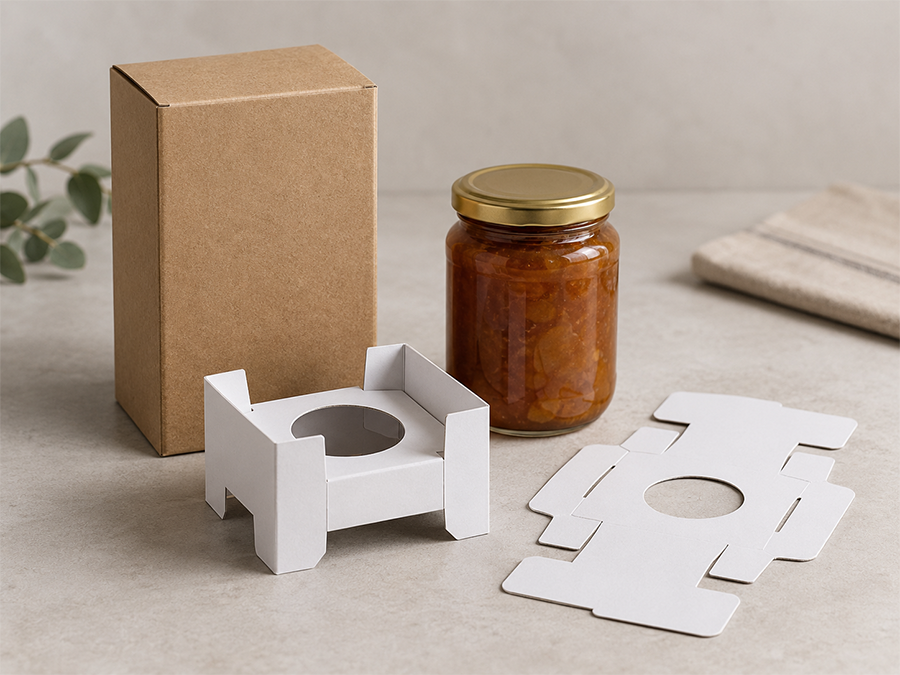
How Product Weight Affects Paper Box Inserts and Internal Support
An insert is not only a presentation feature. It can change how product weight is transferred through the paper box packaging.
A well-designed paperboard or corrugated insert can reduce movement, distribute load, and prevent a heavy component from pressing directly against one carton panel.
For heavier products, insert geometry matters. Thin bridges, narrow cut-outs, and unsupported platforms can bend even when the outer paper box remains strong. The insert needs enough contact area to support the load.
For this reason, samples should be checked with the real product or an accurate weight-and-shape substitute.
Box Size and Weight Must Be Considered Together
A heavier product does not automatically need a much larger paper box. Oversizing can create additional problems.
A box that is much larger than the product uses more material, creates larger unsupported panel areas, and often requires extra void fill. The product can also move farther before contacting the package during handling.
Right-sizing helps the product, insert, and paper box work together more efficiently.
Package size also affects shipping economics. Parcel carriers use dimensional-weight calculations when a package occupies a large amount of space relative to its actual weight, so unnecessarily large packaging can increase transport cost even when the product itself is light.
Heavy Products Need More Than a Stronger Paper Box
Retail packaging and shipping packaging perform different jobs.
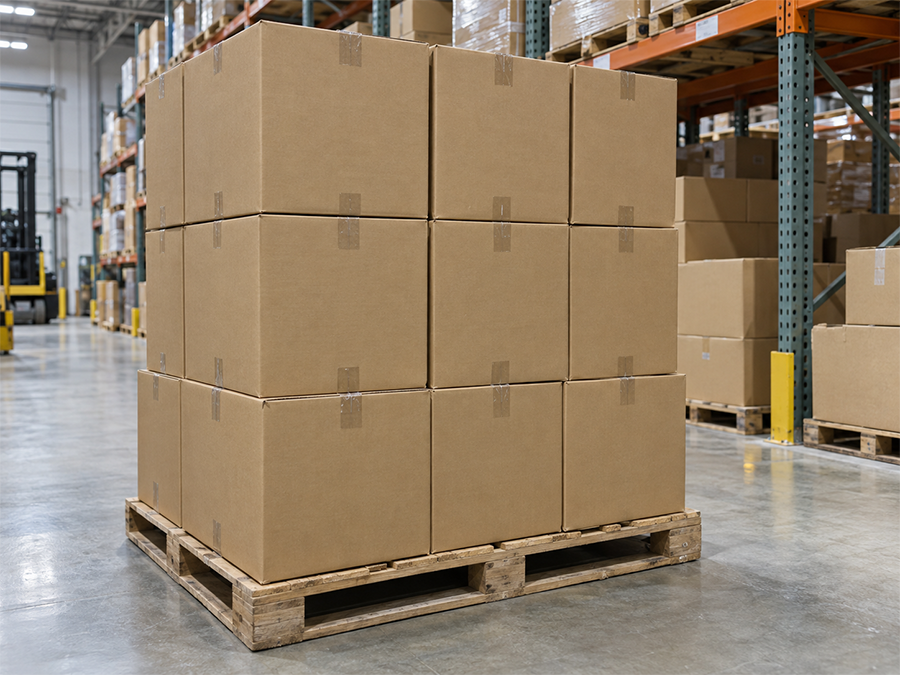
A printed paper box may be designed for presentation, information, and retail handling, while the corrugated outer carton manages distribution loads. For heavier products, expecting a decorative paper box to perform as the complete shipping package can lead to damage.
FedEx advises using double-wall corrugated boxes for heavier items, while UPS recommends strong new boxes and dense cushioning for heavy packages.
The paper box should therefore be evaluated as part of a complete system:
- Product
- Inner or retail paper box packaging
- Insert or cushioning where required
- Corrugated shipping carton
- Pallet or unit load when applicable
Weight Distribution and Center of Gravity Matter
Total weight tells you how much load is present. Weight distribution tells you where that load acts.
A tall paper box with a heavy upper section can tip more easily. A product concentrated near one side can twist an insert or push against a side wall. A dense component resting on a small footprint can create high local stress even when total package weight is moderate.
This is especially important when designing die-cut supports for paper box packaging. The strongest part of the insert should sit under the load, not simply around the visible outline of the product.
A packaging structure should therefore be developed around the actual product orientation rather than only its external dimensions.
Stacking and Compression Become More Important as Weight Increases
Packaging does not only support its own product. During storage and transport, lower packages may support units stacked above them.
As unit weight increases, compression load on lower packages also increases. Panel dimensions, corrugated construction, humidity, storage time, and stacking pattern can influence performance.
This is why shipping-carton strength should not be selected from product weight alone. The same product may require a different outer carton when shipped individually by parcel carrier versus stacked on a pallet.
Packaging specifications should reflect the real distribution route, while the paper box should be designed to protect and present the product within that system.
How to Match Paper Box Packaging Structure to Product Weight
A step-by-step process is more useful than rigid weight categories.
Start With the Filled Product
Record the real packed weight, dimensions, shape, and center of gravity.
Do not rely only on the empty paper box weight if additional components will be included in the final package.
Define the Packaging Role
Decide whether the paper box is intended for retail display, internal organization, direct shipping, or a combination of functions.
This determines how much structural work the package actually needs to perform.
Select a Preliminary Material
Choose paperboard or corrugated material based on stiffness, printability, box size, and expected load.
Material selection should support the structure rather than compensate for a poorly designed paper box dieline.
Strengthen the Areas Where the Load Acts
Review the bottom, corners, insert contact points, glue areas, and closures instead of simply making every part thicker.
Targeted reinforcement usually creates a more efficient paper box packaging structure.
Minimize Unnecessary Empty Space
Keep enough clearance for packing and protection, but avoid oversized paper boxes that allow excessive movement or require unnecessary material.
Test the Complete Pack
Evaluate the product, insert, paper box, and shipping carton together rather than testing each component only in isolation.
Common Mistakes When Packaging Heavier Products in Paper Boxes
One common mistake is increasing paper thickness without changing a weak bottom structure. If the load path is poor, extra thickness may add cost without enough improvement.
Another is testing only an empty paper box. Empty boxes can look rigid even though they deform once the actual product is inserted.
Oversizing is also common. More space does not automatically mean more protection; it may increase movement and require additional cushioning.
Buyers should also avoid treating a printed retail paper box as the only protective layer for transport. Heavier products often need a properly specified corrugated outer carton.
Finally, paper box packaging should be reviewed whenever product weight, dimensions, or internal components change.
Why Paper Box Packaging Testing Matters
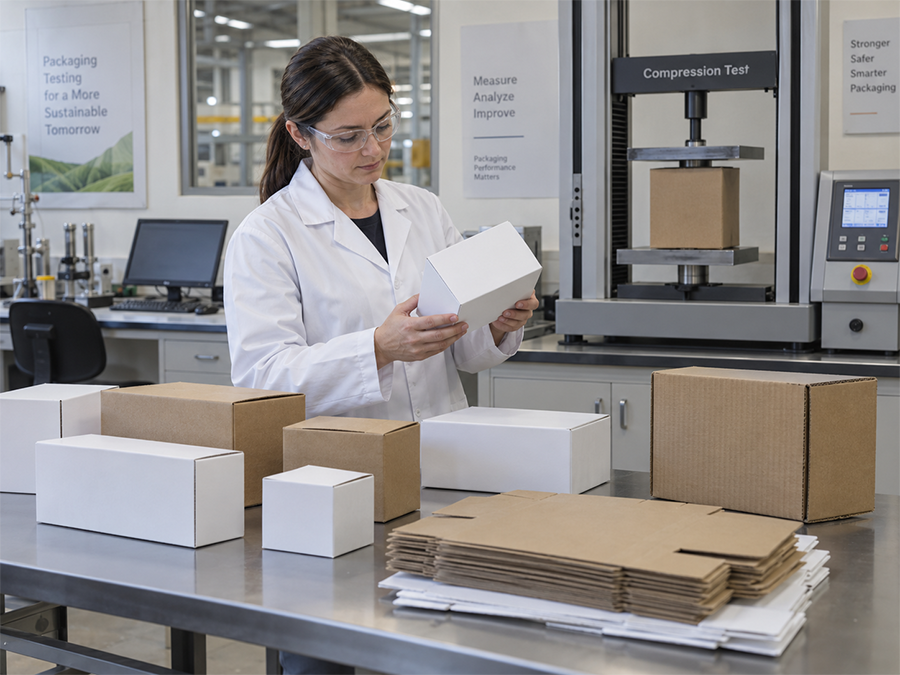
Prototype testing becomes more important when weight, structure, or distribution conditions change.
ISTA states that packaged-product testing should be repeated when product changes include size, weight, shape, mass, or center of gravity, as well as when changes to packaging configuration or materials could affect performance.
Depending on the distribution environment, evaluation may include handling checks, drop testing, compression, vibration, or other appropriate methods.
The goal is to verify that the complete packaged product can reach its destination in acceptable condition without unnecessary material.
What Buyers Should Confirm Before Mass Production
Before approving paper box packaging, provide the manufacturer with the actual product dimensions and filled weight rather than estimates.
Also confirm packing orientation, quantity per box, retail display method, shipping method, and whether an insert is required.
A physical sample should then be checked with the real product inside for deformation, movement, weak insert areas, closing, and balance.
If product weight changes later, the paper box structure should be reviewed again rather than assuming the original specification will continue to perform.
FAQ
Does a heavier product always need thicker paperboard?
No. Heavier products often need stronger material, but structure, box size, load distribution, and inserts can be equally important. A stronger bottom design may improve paper box packaging performance more effectively than simply increasing board thickness.
When should I use corrugated material instead of paperboard?
Corrugated material becomes more important when greater rigidity, stacking strength, or shipping protection is required. A paper box may remain suitable as the retail package while a corrugated carton provides additional shipping protection. The decision should be based on the complete packaging and distribution system rather than one weight threshold.
Can a paperboard insert support a heavy product?
Yes, if it is designed correctly. The insert needs enough material and contact area under the load. Narrow unsupported sections may bend or collapse even when the outer paper box remains intact.
Why does box size matter if product weight stays the same?
Larger paper boxes create larger unsupported panel areas and may allow more internal movement. They can also increase dimensional shipping weight. Product weight and box dimensions should always be evaluated together.
Should paper box packaging be retested if the product weight changes?
Yes, when the change could affect packaging performance. A weight change can alter bottom loading, insert stress, handling, and distribution behavior.
Conclusion
Product weight has a direct influence on packaging material, paper box packaging, and structure, but it should never be used as the only design criterion.
As weight increases, packaging may require stiffer material, stronger bottom construction, better load distribution, more effective inserts, and a more robust corrugated shipping layer. At the same time, box dimensions, center of gravity, fragility, stacking, and distribution conditions can change what “strong enough” actually means.
The most reliable approach is to design the paper box around the real filled product, identify where the load is carried, right-size the box, and test the complete packaging system before mass production.