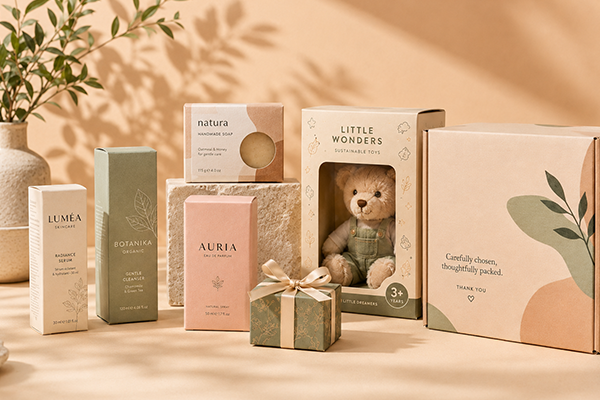
As embalagens de varejo estão mudando mais rápido do que muitas marcas esperavam. Há alguns anos, embalagem era principalmente sobre proteção, impressão, e display de prateleira básico. Em 2026, tornou-se parte da estratégia de mercado de uma marca. Afeta a forma como os clientes veem o produto, como os varejistas o exibem, como chegam os pedidos de comércio eletrônico, e como os compradores julgam a responsabilidade de uma marca.
Para marcas de varejo, a embalagem não é mais apenas uma caixa ao redor do produto. É uma pequena ferramenta de comunicação. Antes que um cliente toque no produto, a embalagem já falou algo sobre qualidade, nível de preço, estilo do produto, e valor da marca.
Isto é especialmente verdadeiro para cosméticos, cuidados com a pele, comida, brinquedos, presentes, sabão, perfume, e pequenos bens de consumo. Esses produtos geralmente competem em prateleiras lotadas ou em mercados on-line onde os clientes tomam decisões rápidas.. Uma caixa de embalagem melhor pode não substituir a qualidade do produto, mas pode ajudar o produto a parecer mais confiável e mais fácil de entender.
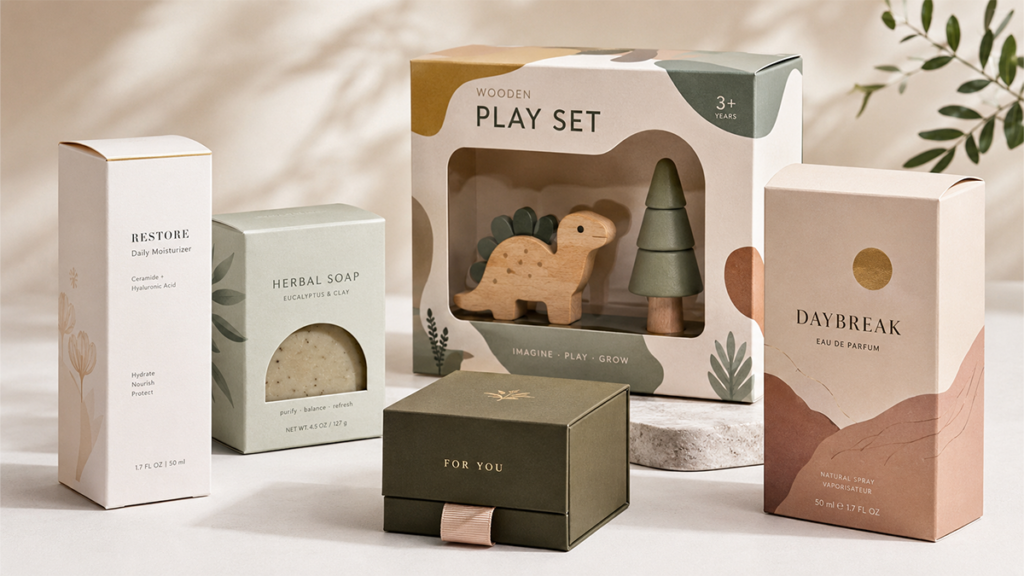
Embalagens sustentáveis estão passando de tendência a requisito básico
Embalagens sustentáveis não são mais apenas um belo extra. Para muitas marcas, tornou-se uma parte básica do planejamento do produto. Os consumidores estão mais conscientes do desperdício, uso de plástico, e reciclagem. Os varejistas também estão prestando mais atenção aos materiais de embalagem, especialmente em mercados onde as regras ambientais estão a tornar-se mais rigorosas.
Caixas de embalagem de papel, caixas de papel kraft, caixas recicláveis, e materiais de papel certificados pelo FSC estão se tornando mais comuns em embalagens de varejo. Isso não significa que todos os produtos devem usar o mesmo material. Isso significa que as marcas precisam pensar com mais cuidado se a embalagem é necessária, fácil de reciclar, e adequado ao produto.
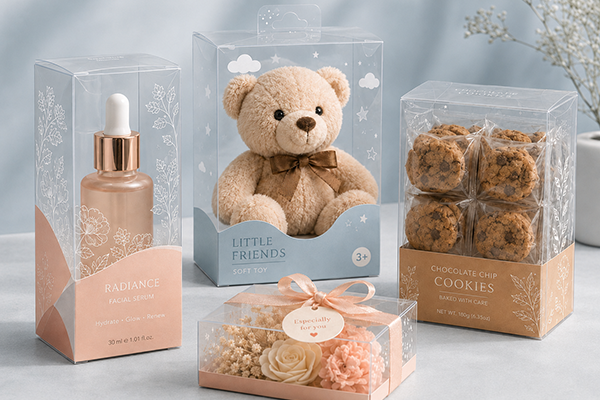
Por exemplo, uma marca de sabonete artesanal pode preferir embalagens de papel kraft porque dá uma sensação natural e limpa. Uma marca de cuidados com a pele pode escolher papelão branco com impressão simples porque parece moderno e é mais fácil de combinar com a imagem de um produto premium. Uma marca de brinquedos pode usar uma caixa de papel com uma janela transparente para reduzir a embalagem totalmente plástica e, ao mesmo tempo, mostrar o produto dentro.
O ponto importante é que embalagens sustentáveis deve ser prático. Uma caixa ainda deve proteger o produto, imprimir claramente, dobre bem, e sobreviver ao transporte. Se o material parecer ecológico, mas falhar durante a produção ou entrega, pode criar mais resíduos em vez de menos.
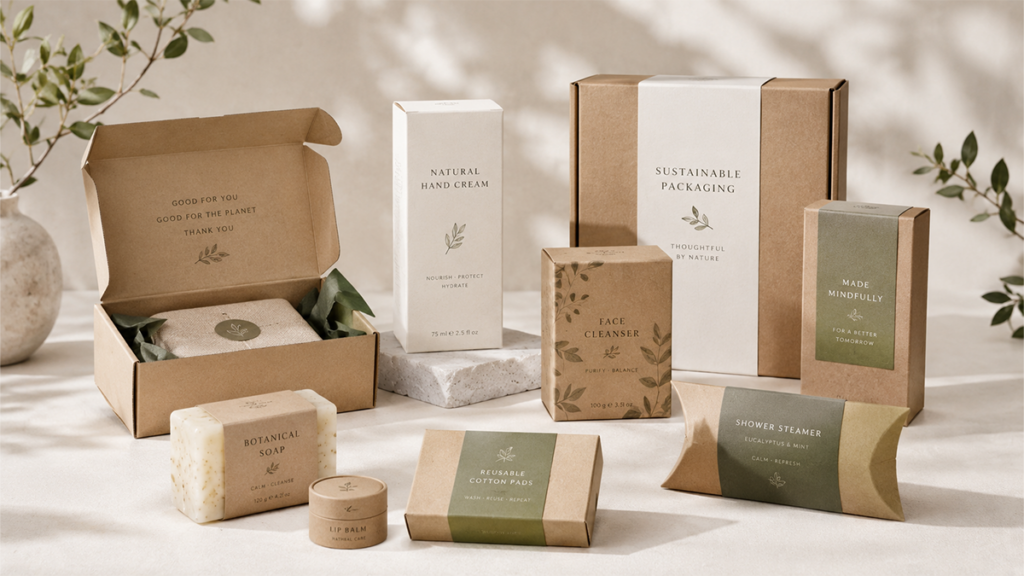
O design minimalista de embalagens está se tornando mais popular
O design minimalista de embalagens continua a crescer em 2026, especialmente em cuidados com a pele, Cosméticos, perfume, produtos de bem-estar, e bens de estilo de vida. Muitas marcas estão abandonando gráficos excessivamente complicados e usando layouts mais limpos, cores mais suaves, tipografia simples, e mais espaço em branco.
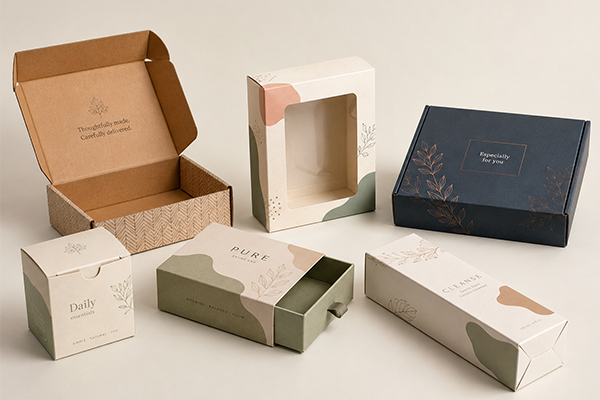
Esta tendência não significa que as embalagens devam parecer vazias. Isso significa que cada elemento de design deve ter um propósito. Uma caixa de papel limpa pode fazer o produto parecer mais premium, especialmente quando combinado com uma boa estrutura, acabamento liso, e informações claras sobre o produto.
Para embalagens de varejo, o design minimalista tem várias vantagens. Pode ajudar o produto a parecer mais moderno. Pode tornar o nome da marca mais fácil de notar. Também funciona bem em diferentes linhas de produtos porque o mesmo sistema de design pode ser usado para tamanhos diferentes, aromas, cores, ou fórmulas.
No entanto, design simples também requer melhor controle de produção. Quando há menos elementos de design, pequenos problemas de impressão tornam-se mais visíveis. Diferença de cor, laminação irregular, linhas de dobramento fracas, ou marcas de cola podem afetar a aparência final. É por isso que as marcas que utilizam embalagens minimalistas devem prestar muita atenção à qualidade do papel, cor de impressão, acabamento superficial, e confirmação da amostra antes da produção em massa.
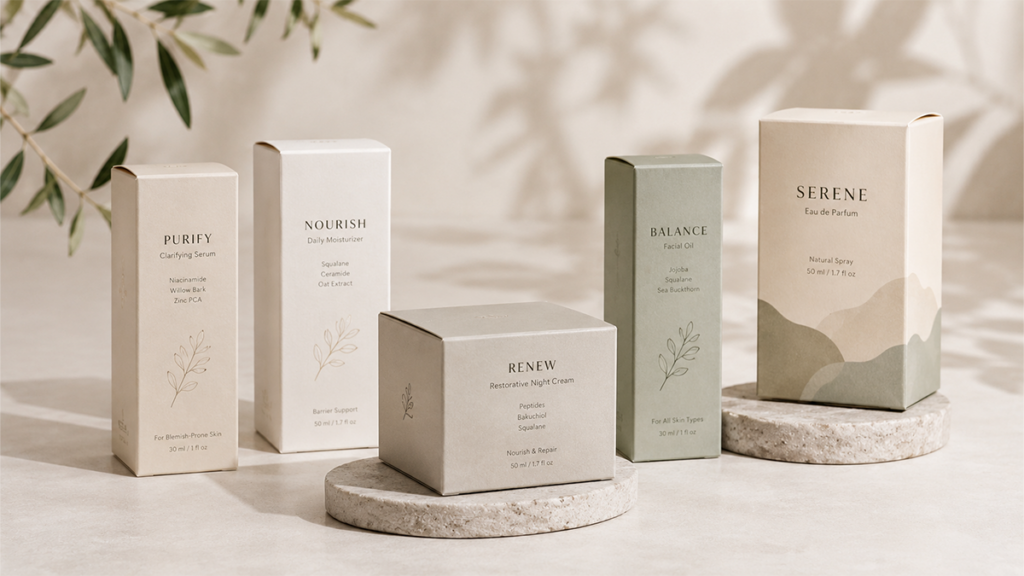
As embalagens de papel estão substituindo algumas aplicações de embalagens plásticas
Outra tendência clara em embalagens de varejo é a mudança de embalagens pesadas de plástico para embalagens de papel, sempre que possível.. Isso está acontecendo na alimentação, Cosméticos, brinquedos, cuidados pessoais, e produtos para presente.
As embalagens de papel não são adequadas para todos os produtos, especialmente quando forte resistência à umidade, transparência, ou proteção de barreira é necessária. Mas para muitos produtos de varejo, caixas de papel pode fornecer um bom equilíbrio entre exibição, proteção, qualidade de impressão, e imagem de marca.
Por exemplo, marcas de brinquedos podem usar caixas de papel com janelas PET em vez de caixas expositoras de plástico. Marcas de cosméticos podem usar caixas dobráveis em vez de embalagens externas de plástico. Marcas de sabonetes podem usar mangas de papel kraft ou caixas com pontas dobradas. Os produtos para presentes podem usar caixas de papel rígidas para criar uma aparência de maior valor.
A razão não é apenas a sustentabilidade. As caixas de papel também oferecem um forte desempenho de impressão. As marcas podem usar impressão CMYK, Cores Pantone, estampagem de folha, gravação, mancha UV, laminação fosca, e outros acabamentos para construir um estilo de marca claro. Comparado com embalagens plásticas simples, uma caixa de papel impressa geralmente oferece mais espaço para contar histórias, informações do produto, e design visual.
A embalagem de janela ajuda os produtos a serem vendidos visualmente
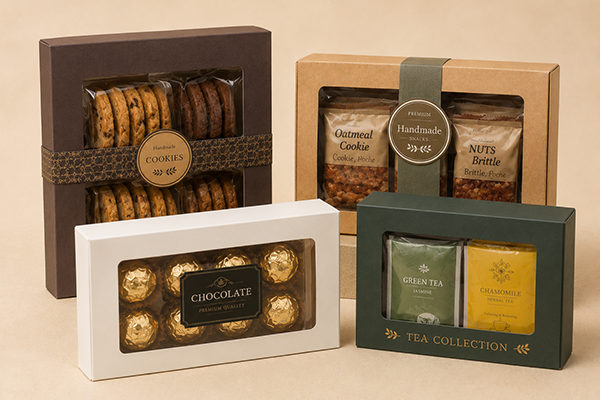
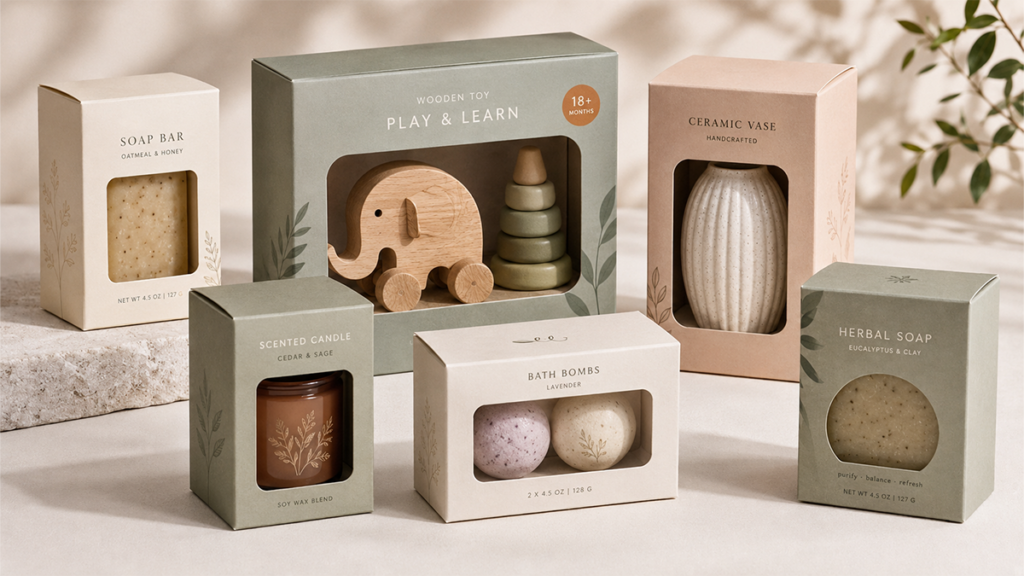
A embalagem de janelas ainda é importante em 2026 porque muitos clientes querem ver o produto antes de comprar. Isso é comum em brinquedos, sabão, itens de padaria, presentes, velas, acessórios, e alguns cosméticos.
UM caixa de papel com janela transparente pode dar aos clientes confiança visual. Mostra a cor do produto, forma, textura, ou definir o arranjo enquanto mantém a estrutura da embalagem forte. Para lojas de varejo, as floreiras também podem tornar a exibição nas prateleiras mais atraente porque o próprio produto se torna parte do design.
Mas a embalagem para janelas deve ser usada com cuidado. Uma janela muito grande pode enfraquecer a estrutura da caixa. Uma janela muito pequena pode não mostrar detalhes suficientes do produto. A colocação também importa. Deve corresponder à forma como o produto fica dentro da caixa e como o cliente o verá na prateleira.
Para marcas, a melhor embalagem de janela não se trata simplesmente de adicionar transparência. Trata-se de equilibrar a visibilidade do produto, força da caixa, área de impressão, e efeito de exibição de varejo.
As embalagens de comércio eletrônico precisam de melhor proteção e melhor experiência
As embalagens de varejo não são mais projetadas apenas para prateleiras de lojas. Muitos produtos agora são vendidos offline e online. Isso significa que a embalagem deve funcionar para diferentes canais de vendas.
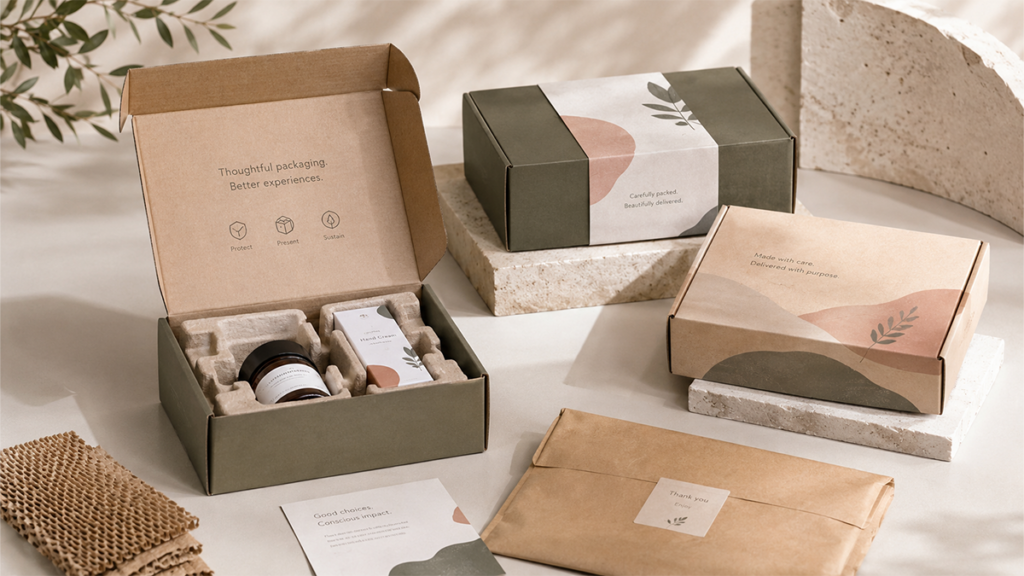
As embalagens de comércio eletrônico precisam proteger o produto durante o armazenamento, manuseio, e envio. Uma linda caixa de varejo pode ficar bem em uma prateleira, mas se for esmagado durante o parto, a experiência do cliente será ruim. É por isso que mais marcas estão considerando um papel mais resistente, caixas postais onduladas, inserções, mangas, e estruturas de proteção.
Ao mesmo tempo, embalagens de comércio eletrônico também afetam a experiência de unboxing. Os clientes costumam julgar uma marca quando abrem a embalagem pela primeira vez. Uma limpeza, caixa bem estruturada pode tornar o produto mais profissional. Isto é especialmente importante para cuidados com a pele, perfume, conjuntos de presentes, caixas de assinatura, e bens de consumo premium.
O desafio é o custo. As marcas precisam evitar embalagens excessivas e, ao mesmo tempo, proteger o produto. Em 2026, uma boa embalagem de comércio eletrônico não significa usar o material mais grosso. Trata-se de escolher a estrutura certa, tamanho certo, e nível certo de proteção.
Pequenas marcas precisam de soluções de embalagens mais flexíveis
O mercado de varejo mudou porque muitas marcas pequenas agora vendem nas lojas Shopify, Amazônia, Loja TikTok, Etsy, boutiques locais, e mídias sociais. Essas marcas podem não precisar de pedidos de embalagens muito grandes no início, mas eles ainda precisam de embalagens que pareçam profissionais.
Isso cria uma demanda crescente por soluções flexíveis embalagens de varejo soluções. As pequenas marcas geralmente se preocupam com a quantidade mínima de pedido, velocidade da amostra, suporte de arquivo de design, conselhos sobre estrutura de caixa, e repetir a estabilidade do pedido.
Por exemplo, uma nova marca de sabonete pode querer vários designs de caixas para aromas diferentes. Uma startup de cuidados com a pele pode precisar de embalagem para o lançamento do primeiro produto. Uma marca de brinquedos pode precisar de um pequeno pedido de teste antes de entrar em um canal de varejo maior.
Para essas marcas, embalagem faz parte de testes de mercado. Eles precisam de embalagens que possam apoiar a marca sem criar muita pressão no estoque. É por isso que opções práticas de caixas de papel, estruturas simples, e a comunicação clara da produção estão se tornando mais importantes.
A estrutura da embalagem está se tornando tão importante quanto o design
Muitas marcas gastam muito tempo em gráficos de embalagens, mas a estrutura da caixa é tão importante. Um design bonito não ajudará muito se a caixa for difícil de montar, fácil de deformar, ou não é adequado para o tamanho do produto.
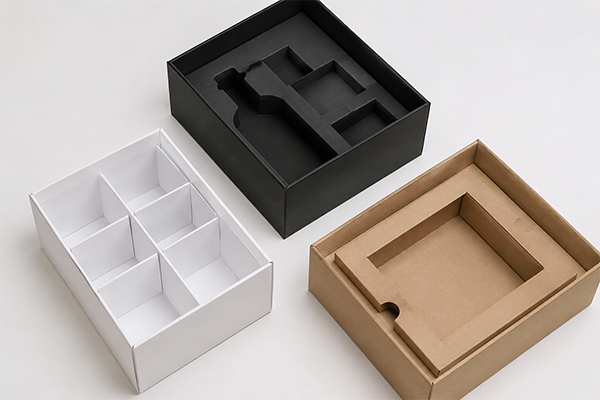
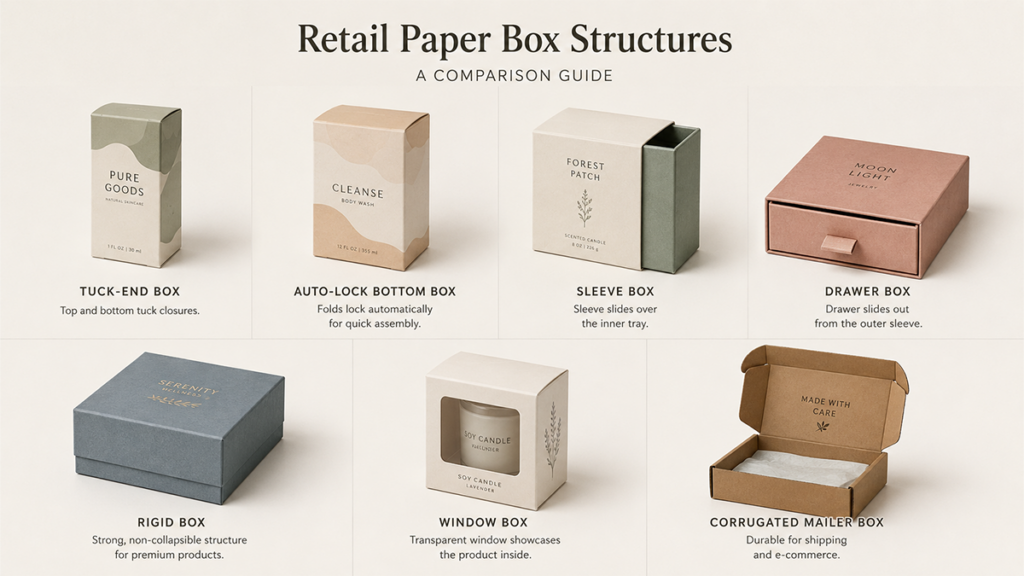
Em embalagens de varejo, estrutura afeta muitas coisas: proteção do produto, exibição de prateleira, custo de envio, experiência de abertura do cliente, e eficiência de produção. Estruturas comuns de caixas de varejo incluem caixas com extremidades dobradas, caixas inferiores com bloqueio automático, caixas de manga, caixas de gaveta, caixas rígidas, caixas de janela, e caixas postais de papelão ondulado.
Cada estrutura tem um uso diferente. Uma caixa com extremidade dobrada é comum para produtos leves de varejo. Uma caixa inferior com trava automática funciona melhor para produtos mais pesados. Uma caixa de gaveta dá uma sensação mais premium. Uma caixa de janela melhora a visibilidade do produto. Uma caixa postal é melhor para remessa de comércio eletrônico.
Em 2026, as marcas não devem apenas perguntar, “Qual design parece bom?"Eles também deveriam perguntar, “Qual estrutura de caixa se adapta ao nosso produto, canal de vendas, e orçamento?”
O acabamento premium é usado de forma mais seletiva
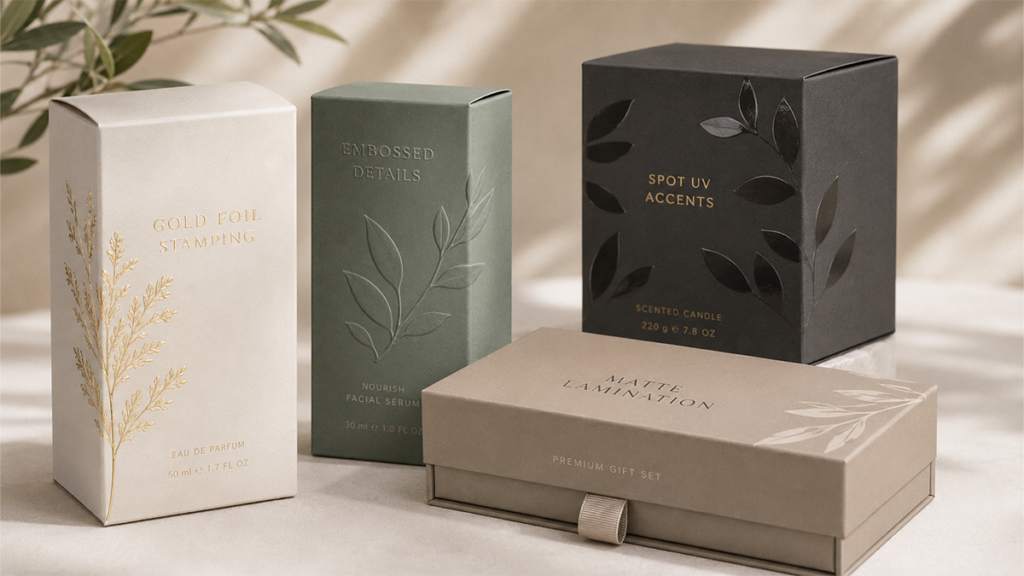
Estampagem de folha, gravação, mancha UV, laminação de toque suave, e revestimentos especiais ainda são populares em embalagens de varejo. Eles podem fazer uma caixa de papel parecer mais premium e ajudar os produtos a se destacarem.
No entanto, marcas estão se tornando mais seletivas. Em vez de usar muitos acabamentos ao mesmo tempo, muitas vezes escolhem um ou dois detalhes que combinam com o estilo da marca. Por exemplo, uma caixa de perfume pode usar folha de ouro no logotipo. Uma caixa de cuidados com a pele pode usar laminação fosca com relevo sutil. Uma caixa de presente pode usar UV especial para destacar um padrão.
Essa tendência é mais prática. Muitos acabamentos podem aumentar o custo, estender o tempo de produção, e fazer a embalagem parecer ocupada. Um bom acabamento deve apoiar o design, não cubra isso.
Para marcas de varejo, a melhor escolha depende do posicionamento do produto. Um produto de luxo pode precisar de um acabamento mais refinado. Um produto natural pode ficar melhor com papel kraft e impressão simples. Um brinquedo infantil pode precisar de cores mais brilhantes e uma estrutura de exibição forte em vez de um acabamento luxuoso.
Informações claras sobre o produto são mais importantes do que antes
Os clientes querem embalagens fáceis de entender. Isto é especialmente importante para alimentos, cuidados com a pele, Cosméticos, produtos relacionados à saúde, brinquedos, e produtos ecológicos.
Uma caixa de varejo deve mostrar claramente o que é o produto, o que o torna diferente, como usá-lo, e qualquer informação importante de segurança ou material. Se o design é bonito, mas a mensagem não é clara, os clientes podem hesitar.
Isso não significa que o pacote deva estar cheio de texto. Isso significa que a hierarquia da informação deve ser clara. O painel frontal pode focar no nome da marca, nome do produto, e principal ponto de venda. Os painéis laterais ou traseiros podem explicar os ingredientes, uso, avisos, certificações, tamanho, ou informações da empresa.
Um bom design de embalagem ajuda os clientes a tomar decisões rapidamente. Em um ambiente de varejo lotado, a clareza pode ser mais poderosa que a decoração.
A consistência da marca em todas as linhas de embalagem é mais importante
Muitas marcas agora vendem vários produtos em diferentes canais. Isso torna a consistência da embalagem muito importante. Uma marca de cuidados com a pele pode ter limpador, sérum, creme, e produtos de máscara. Uma marca de sabonete pode ter muitos aromas. Uma marca de brinquedos pode ter várias séries.
Se cada pacote parecer completamente diferente, os clientes podem não reconhecer a marca facilmente. Um sistema de embalagem consistente ajuda a criar uma memória de marca mais forte. Isso pode incluir cores consistentes, colocação do logotipo, tipografia, estrutura de caixa, estilo de acabamento, e layout de informações do produto.
Ao mesmo tempo, a embalagem ainda deve deixar espaço para diferenças de produto. Por exemplo, cores diferentes podem identificar diferentes aromas ou fórmulas. Diferentes formatos de janela podem mostrar diferentes tipos de produtos. Diferentes tamanhos de caixa podem se adequar a diferentes linhas de produtos, mantendo a mesma linguagem de design.
Em 2026, embalagem de varejo não é apenas uma caixa. Trata-se de construir um sistema de embalagem que possa crescer com a marca.
A embalagem deve equilibrar o apelo do mercado e a realidade da produção
Um erro comum é projetar embalagens apenas do ponto de vista visual. Um design pode parecer excelente na tela, mas ainda precisa funcionar em produção real.
Antes de finalizar um design de embalagem de varejo, marcas devem considerar o material de papel, tamanho da caixa, linhas dobráveis, método de impressão, acabamento superficial, área de cola, posição da janela, e método de envio. Esses detalhes afetam o resultado final.
Por exemplo, papel kraft pode fazer as cores parecerem mais escuras. Uma janela grande pode reduzir a resistência da caixa. A cobertura pesada de tinta pode exigir mais atenção durante a impressão e secagem. Uma estrutura complexa pode aumentar o tempo de montagem. Uma caixa muito pequena pode não ter espaço suficiente para todas as informações necessárias.
É por isso que o planejamento de embalagens deve combinar design, marketing, e lógica de produção. Uma boa caixa de varejo deve parecer atraente, proteger o produto, apoiar a mensagem da marca, e ser prático para produzir.
Considerações Finais
Tendências de embalagens para varejo em 2026 não são apenas sobre aparência. Eles estão conectados à sustentabilidade, crescimento do comércio eletrônico, expectativas do consumidor, visibilidade do produto, consistência da marca, e eficiência de produção.
Para marcas, a melhor embalagem nem sempre é a opção mais cara ou complicada. É a embalagem que cabe no produto, posição de mercado, canal de vendas, e expectativa do cliente.
Caixas de embalagem de papel continuarão a desempenhar um papel importante nos mercados retalhistas porque oferecem um forte desempenho de impressão, estruturas flexíveis, e uma ampla gama de possibilidades de design. Se uma marca vende cosméticos, brinquedos, sabão, perfume, comida, ou produtos para presente, a embalagem deve ser planejada como parte da estratégia do produto, não como uma decisão de última hora.
Antes de iniciar um novo projeto de embalagem para varejo, marcas devem preparar o tamanho do produto, quantidade, estilo de caixa, direção de projeto, preferência material, e canal de vendas. Esses detalhes facilitam a escolha de uma solução de embalagem que funcione tanto no mercado quanto na produção.
Perguntas frequentes
Quais são as principais tendências de embalagens para varejo em 2026?
As principais tendências incluem embalagens sustentáveis, design minimalista, embalagem amigável para comércio eletrônico, materiais à base de papel, embalagem de janela, consistência de marca mais forte, e melhor equilíbrio entre design e praticidade de produção.
Que tipo de embalagem é melhor para produtos de comércio eletrônico?
Os produtos de comércio eletrônico geralmente precisam de embalagens com melhor proteção, força de caixa adequada, e bom controle de tamanho. Caixas postais onduladas, inserções, e estruturas de papelão mais fortes são comumente usadas.
Como as marcas podem fazer com que as embalagens de varejo pareçam mais premium?
As marcas podem usar melhor material de papel, design limpo, cor consistente, estampagem de folha, gravação, mancha UV, laminação fosca, ou estruturas de caixa rígida. O segredo é escolher acabamentos que correspondam à posição do produto em vez de adicionar muitos efeitos.