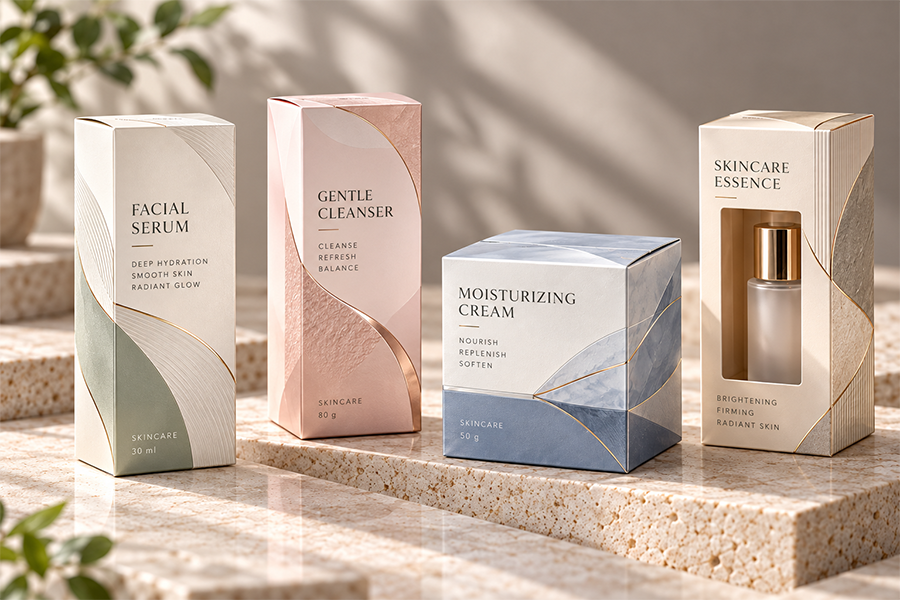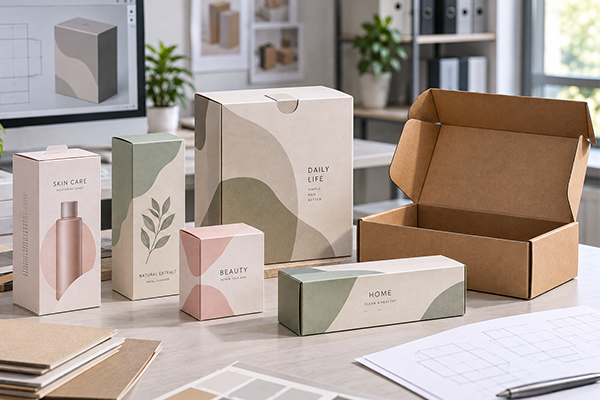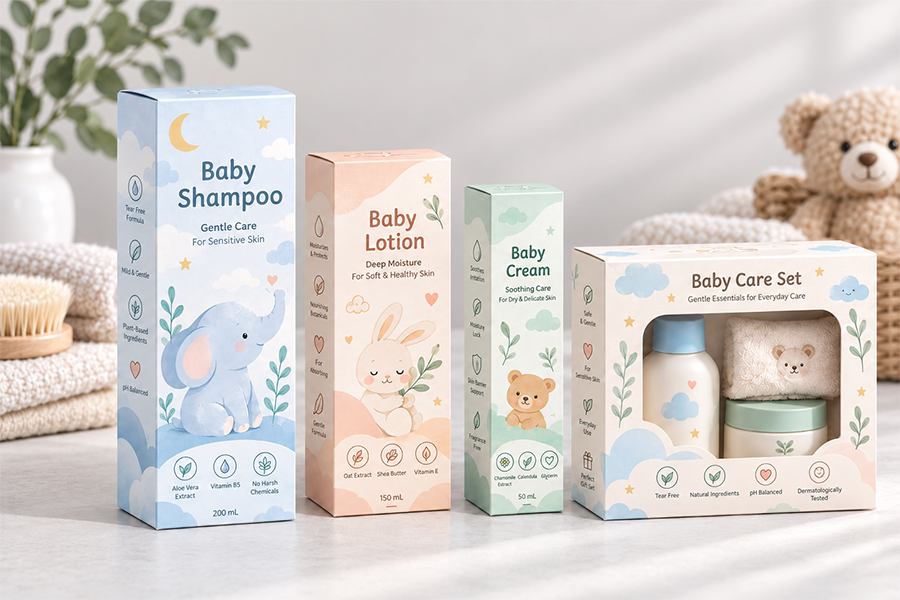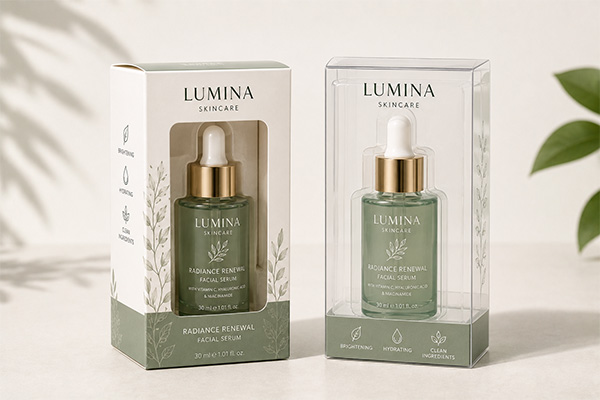
Choosing a paper box for skincare products should start with the container inside, not with the appearance of the box. A tall serum bottle, a wide cream jar, a pump bottle, and a lightweight skincare tube all place different demands on the packaging structure.
For packaging buyers, the practical question is: Which paper box style fits the container, supports its filled weight, and works well for packing and retail display?
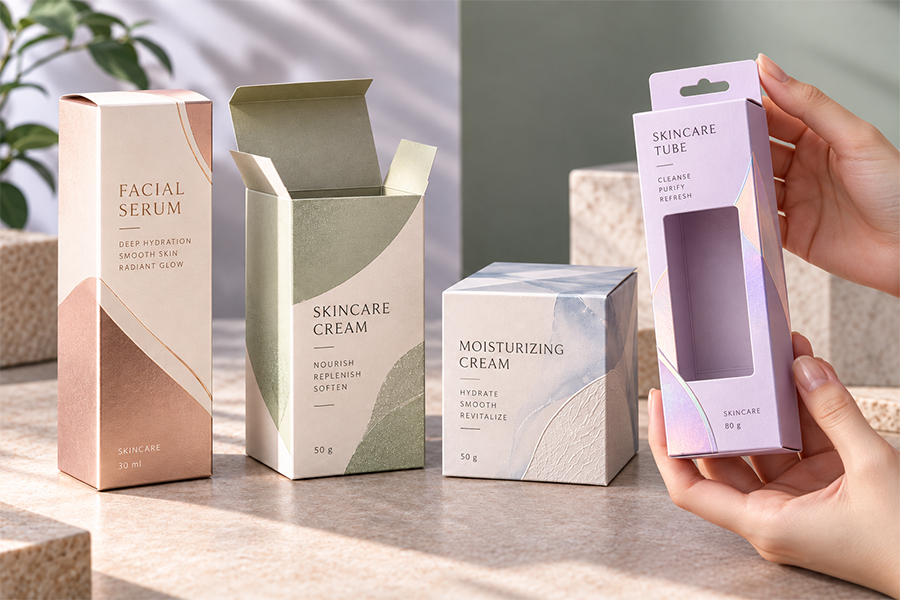
In most cases, four structures cover the main requirements: straight tuck end, reverse tuck end, auto-lock bottom, and window paper boxes. The right choice depends mainly on container shape, weight, closure method, and whether customers need to see the product.
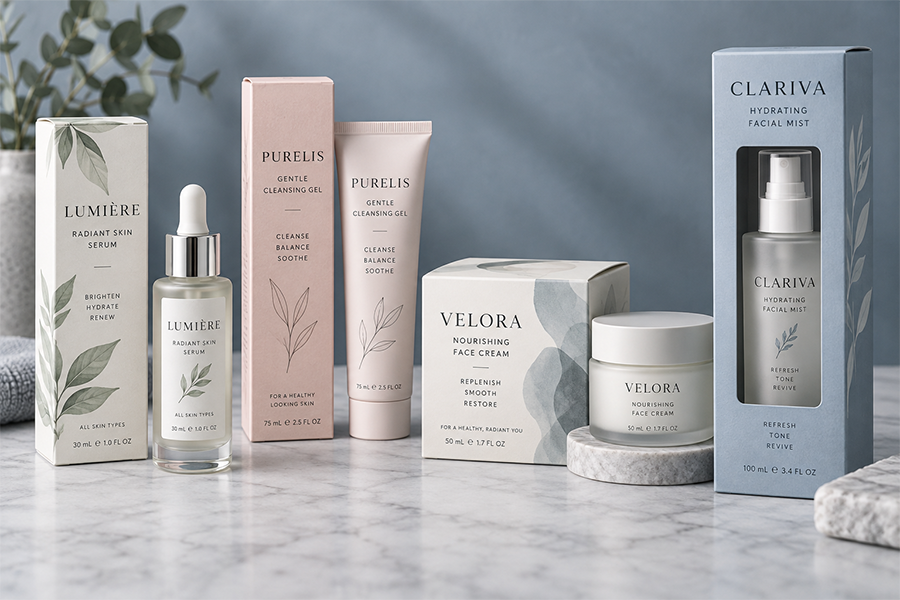
Which Paper Box Style Fits Each Skincare Product?
| Skincare Container | Recommended Starting Point | Main Reason |
|---|---|---|
| Tall serum bottle | Straight Tuck End | Clean structure for slim bottles |
| Lightweight serum or tube | Reverse Tuck End | Simple and efficient structure |
| Heavier cream jar | Auto-Lock Bottom | Better bottom support when needed |
| Visible bottle or jar | Window Paper Box | Allows controlled product display |
This is only a starting point. The final structure should still be checked against the actual container dimensions and filled weight.
Straight Tuck End Boxes for Serum Bottles
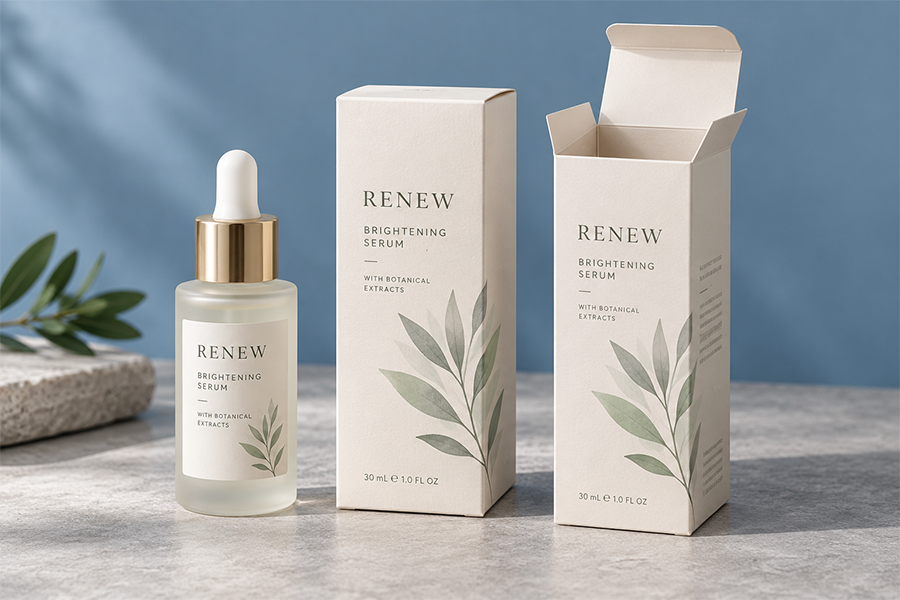
A straight tuck end paper box is a practical choice for many tall serum bottles. The top and bottom tuck flaps close in the same direction, helping maintain clean front and back panels.
This structure works particularly well for dropper bottles, facial oil bottles, and slim pump containers. The tall rectangular format also provides useful space for the product name, usage information, and brand graphics.
For a glass serum bottle, fit is important. The paper box should not contain excessive empty space that allows the bottle to move during handling.
Reverse Tuck End Boxes for Lightweight Skincare Products
A reverse tuck end paper box uses top and bottom flaps that close in opposite directions. It is another practical structure for lightweight serum bottles, skincare tubes, and smaller containers.
From the customer’s perspective, straight tuck and reverse tuck boxes can look quite similar. The main differences are in the flap direction, dieline arrangement, packing process, and how the artwork is positioned around the closures.
For lightweight products that do not require additional bottom strength, reverse tuck end packaging provides a straightforward paper box structure without unnecessary complexity.
Auto-Lock Bottom Boxes for Heavier Cream Jars
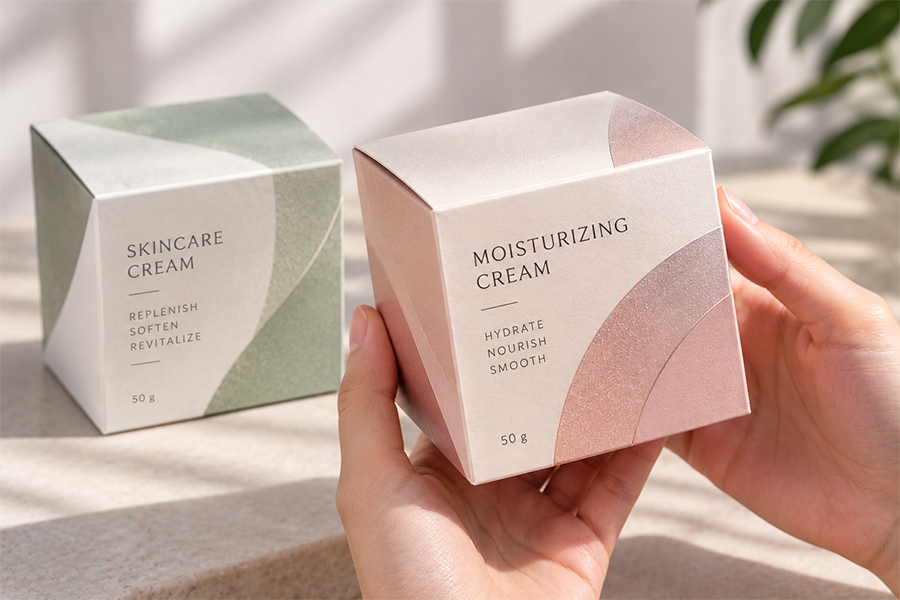
Cream jars are often shorter, wider, and heavier than serum bottles. When the filled jar puts more load on the bottom panel, an auto-lock bottom paper box can provide stronger support than a basic tuck closure.
Its pre-glued bottom panels move into position when the box is erected, creating a more secure base.
However, cream jars do not automatically require this structure. A lightweight plastic jar may work well in a simpler box. Auto-lock bottom construction is more useful when the actual product weight and dimensions justify additional bottom support.
This is why packaging should be selected using the filled product rather than simply deciding that “serum uses one box and cream uses another.”
Window Paper Boxes for Products Worth Showing
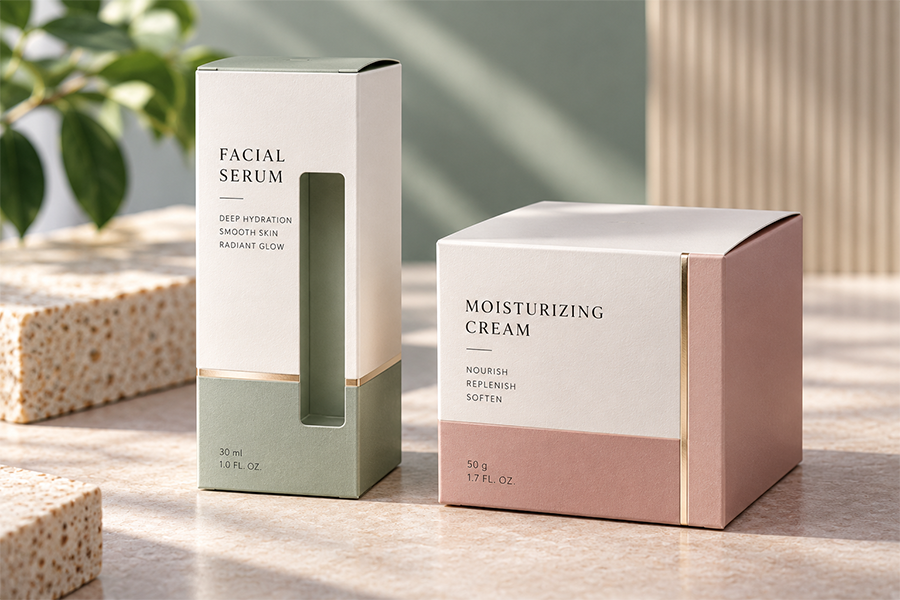
A window paper box makes sense when the skincare container itself adds to the product presentation.
A narrow vertical window can reveal the bottle color or label of a serum, while a shorter and wider opening may suit a cream jar. The window allows customers to see the real container while the surrounding paperboard remains available for branding and product information.
The window should not be larger than necessary. Removing too much paperboard can reduce structural rigidity and leave less printable space.
For most skincare packaging, controlled visibility is more useful than trying to expose the entire container.
How to Match the Paper Box to the Container
The easiest way to choose a box style is to begin with the real primary container.
For a tall, lightweight serum bottle, compare straight tuck end and reverse tuck end structures first. Check the bottle height, width, dropper or pump height, and filled weight.
For a cream jar, focus more on width and bottom loading. A basic structure may be enough for a lightweight jar, while a heavier container may need stronger bottom construction.
For a pump bottle, measure the complete height including the pump head. The top closure should leave enough clearance so the dispenser is not compressed when the product is packed.
For a skincare tube, a simple tuck-end box is often sufficient because the product is usually lightweight.
Only after the basic structure is selected should features such as a window or additional internal support be considered.
What to Confirm Before Production
Before mass production, test a physical sample with the actual serum bottle, cream jar, pump bottle, or tube inside.
Check whether the product fits correctly, the bottom remains stable, the flaps close smoothly, and the box stays straight. If a window is used, make sure it aligns with the part of the product you want customers to see.
Artwork and surface finishing should be finalized after the structural dieline is confirmed so important text or graphics do not fall across folds, glue areas, or window cut-outs.
A digital rendering can show the visual direction, but a physical sample is more reliable for confirming structure and product fit.
Conclusion
The best paper box styles for serums, creams, and skincare products should be selected according to the container inside.
Straight tuck end and reverse tuck end boxes suit many lightweight serum bottles and tubes. Auto-lock bottom boxes can provide additional support for heavier cream jars, while window paper boxes are useful when product visibility matters.
Instead of forcing an entire skincare range into one structure, match each paper box to the container shape, filled weight, closure, and display requirement. Testing the actual product in a physical sample before production is the most practical way to confirm the final choice.
Bailipack can customize skincare paper boxes according to the product dimensions, weight, required paper box structure, printing, surface finishing, and window design.