Flexographic printing, usually called flexo, is a direct printing method. A flexible plate with a raised image picks up ink and presses it onto the material. It runs fast, prints on many kinds of surfaces, and suits repeated or high-volume packaging jobs.
You’ll find it on corrugated boxes, labels, paper, plastic films, and flexible packaging. It isn’t the right choice for every project, so it helps to know how it works before deciding.
How Does Flexographic Printing Work?
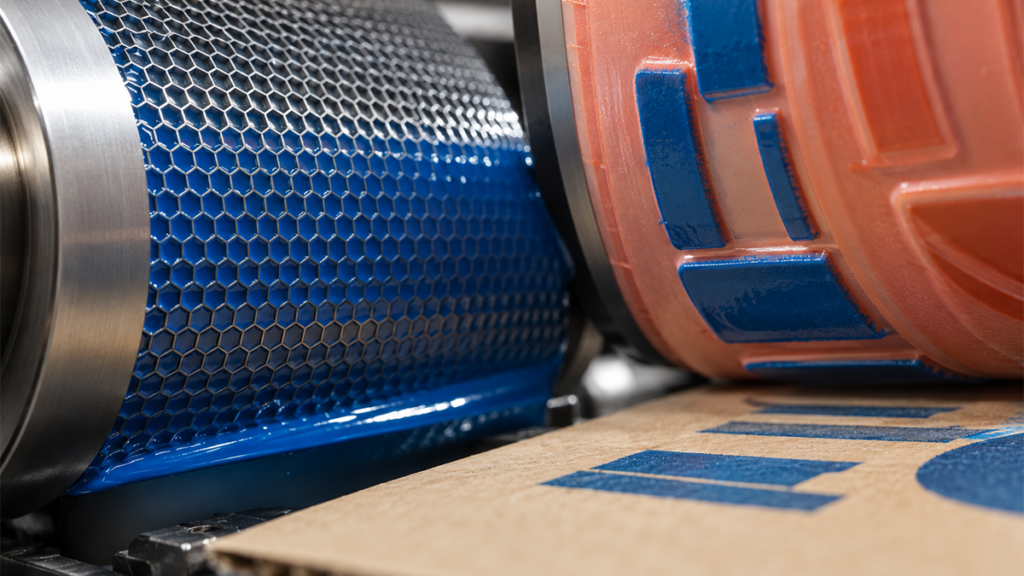
Ink goes onto the raised image on a flexible plate, and the plate prints that image straight onto the material.
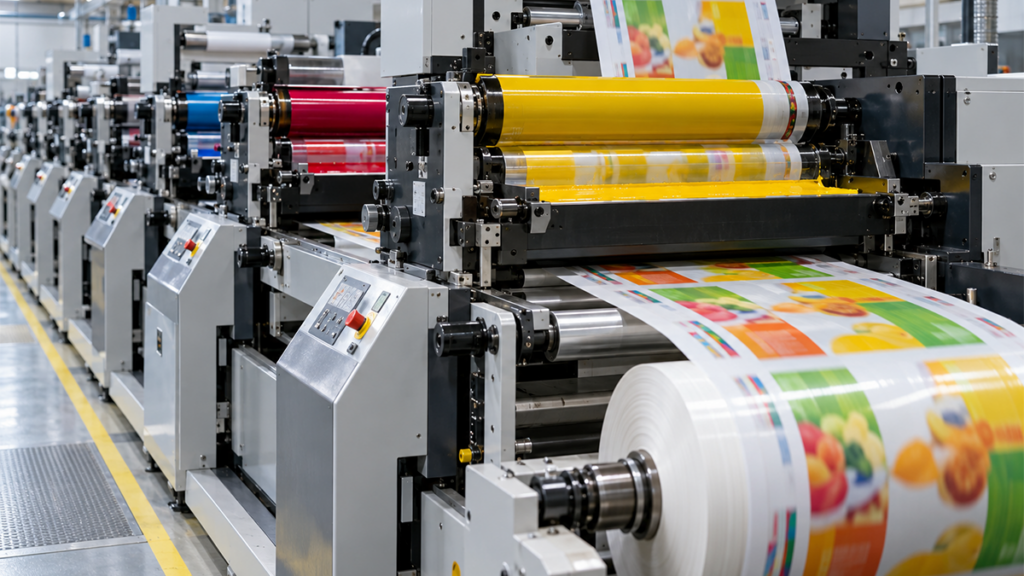
The key part is the anilox roller. Its surface is covered in microscopic cells that hold a controlled amount of ink and pass it to the raised areas of the plate. For multi-color artwork, each color has its own plate and its own printing station, and the material moves through the stations until the design is complete.
Ink → Anilox Roller → Flexible Printing Plate → Packaging Material
The Flexographic Technical Association lists inks, plates, substrates, and anilox rollers as the core parts of the process.
The Main Steps in the Flexo Printing Process
The press runs fast, but the quality of the result is mostly decided before the material reaches it.
- Artwork preparation. Colors, text, trapping, and separations are set up for the press and the material. Every color needs its own plate, so the number of colors affects how complicated the job is.
- Plate making. Each color’s artwork is transferred onto a flexible relief plate. A flaw in the plate shows up in the print, so plate quality matters.
- Plate mounting. Plates are mounted on their cylinders. If the alignment is off, colors won’t register properly.
- Printing. The material runs through the press, and each unit adds one color.
- Drying and converting. The print is dried or cured, then moves on to steps like die-cutting, depending on the equipment.
What Materials Can Flexo Print On?
Flexo isn’t tied to one kind of surface, which is a big reason it became so common in packaging. It prints on:
- Corrugated board
- Kraft paper
- Paper and paperboard
- Labels
- Plastic films
- Flexible packaging materials
- Bags and sacks
Corrugated is one of its biggest markets. Smithers reports that flexography accounts for the overwhelming majority of corrugated board printing, with labels, flexible packaging, and cartons as other major uses.
Advantages of Flexographic Printing
- Speed. Once the job is set up, a flexo press runs continuously at high speed.
- Material range. Corrugated board, uncoated paper, labels, and films each need different ink and press settings, but all run through the same process.
- Repeat orders. Plates can be kept and reused when the artwork stays the same and the plates are in good condition, so the plate cost is spread over more printed units.
- Ink options. Different ink systems can be used depending on the job, material, and press.
The main advantage is production efficiency, more than print quality on its own.
Limitations of Flexo Printing
Setup. Plates have to be made and mounted before anything prints, and each color needs its own. That makes flexo a poor fit for very small quantities, frequent artwork changes, or one-off samples.
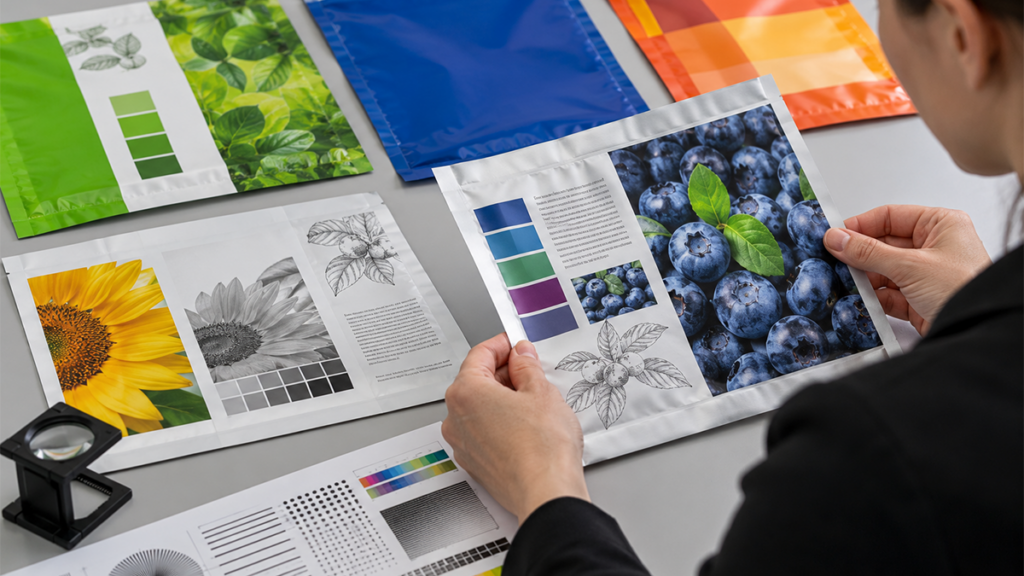
Detail. Fine lines, small text, gradients, and registration need careful control, and the material matters a lot. Ink sits differently on a smooth coated sheet than on porous kraft paper or corrugated board. We often see artwork that looked sharp on screen come out softer on kraft board.
A few things to check with your printer before production:
- Number of colors: each extra color adds a plate and more setup.
- Fine text and thin lines: confirm they hold up on your material and plate.
- Large solid areas: they need good ink transfer to stay even.
- Photos and gradients: possible with flexo, but review the artwork first.
Flexographic Printing vs Offset Printing
| Feature | Flexographic Printing | Offset Printing |
|---|---|---|
| Image Transfer | Plate prints directly onto substrate | Image transfers through a rubber blanket |
| Printing Plate | Flexible relief plate | Flat offset plate |
| Common Uses | Corrugated, labels, films, flexible packaging | High-quality printed paperboard and paper boxes |
| Material Range | Very broad | Strongest on paper and paperboard |
| High-Volume Work | Very suitable | Very suitable |
| Detailed Paper Graphics | Good with proper control | Often preferred for highly detailed retail cartons |
For paper boxes with detailed graphics, offset is often the stronger choice. For corrugated packaging or continuous high-volume materials, flexo is usually more practical.
Flexographic Printing vs Digital Printing
Digital printing doesn’t need conventional plates, so artwork changes are easy and it suits small quantities and multiple versions. Flexo takes more preparation, but the efficiency pays off once the same design is produced repeatedly in larger volumes.
The gap is narrowing. Smithers notes that digital is increasingly competitive with flexo in shorter-run packaging, while flexo stays strong in corrugated, flexible packaging, and labels.
When Should You Choose Flexographic Printing?
Flexo is worth considering for larger quantities, repeat production, corrugated board, labels, and other materials usually run on roll-fed presses. Before you decide, work out:
- What material will be printed?
- How large is the quantity?
- How many colors are required?
- How detailed is the artwork?
- Will the design be reordered?
If the run is very short or the artwork changes often, digital may make more sense. If you need detailed graphics on paperboard for a high-end retail look, compare offset.
If you’re not sure which fits, send us your artwork, material, and quantity, and we’ll tell you which method we’d run it on and why.
FAQ
What does flexographic printing mean?
It’s a direct printing process that uses flexible raised plates to transfer ink onto materials like paper, corrugated board, labels, and films.
Why is an anilox roller important in flexo printing?
It meters a controlled amount of ink and passes it to the plate, which keeps ink coverage consistent.
Does each flexo color need a separate printing plate?
Normally, yes. Each color is separated and printed with its own plate and printing station.
Is flexo better than offset printing?
Neither is better across the board. Flexo is strong in corrugated, labels, films, and high-volume work. Offset is commonly chosen for detailed printing on high-quality paperboard.